
Window Cleaning
Window Cleaning Quoting Mistakes That Cost You Money
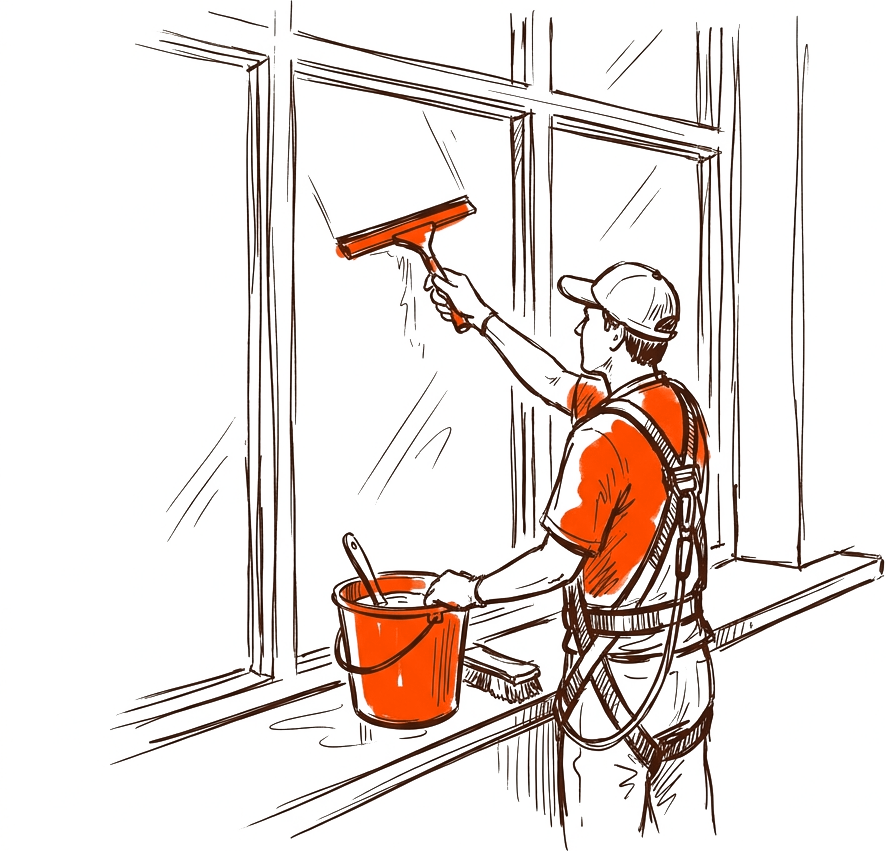
Every window cleaner has lost money on a job that looked profitable on paper. The quote felt right, the customer said yes, and then the day turned into a slog: hard water stains you did not account for, a second-story ladder setup you forgot to price, and a customer who paid three weeks late. The problem usually is not the cleaning. It is the quoting. Here are the most common window cleaning quoting mistakes that quietly drain your margins, plus specific fixes you can use on your next estimate.
Key takeaways
- Most lost profit comes from forgotten prep work and unpriced access challenges, not low hourly rates.
- Build overhead into every quote so your 'profit' is actually profit, not reimbursement for gas and insurance.
- Quote fast and collect a deposit. Speed wins jobs and deposits cut your no-shows and slow payers.
- Standardize your pricing so any crew member quotes the same job the same way.
Mistake 1: Forgetting prep and problem glass
The fastest way to blow a quote is to price clean glass when the glass is not clean to begin with. Hard water spots, overspray, construction debris, stickers, and screens that have not been removed in years all add real time. A standard exterior wipe is one thing. Restoring etched or spotted glass is a completely different job, and it should be priced like one.
Walk the property before you quote, or ask for photos if you are quoting remotely. Look for the stuff that eats labor: screens that need cleaning, tracks and sills full of dirt, hard water buildup, and any glass that needs a scraper or restoration pad.
Build a prep checklist
Add line items for screen cleaning, track and sill detailing, hard water removal, and sticker or paint removal. If you do not see them, you do not charge for them, and you still have to do them.
Mistake 2: Underpricing your overhead
A lot of window cleaners price off a rough hourly number in their head and call whatever is left over 'profit.' But that number usually only covers labor. It ignores the real cost of running the business: insurance, vehicle, fuel, water-fed poles and pure water systems, soap and tools, phone, software, and the hours you spend quoting and driving that nobody pays you for directly.
Figure out your true cost per hour, then price above it. Here is a simple worked example:
- Crew pay: 25 dollars per hour per person
- Overhead loaded on top (insurance, vehicle, fuel, tools, software, admin time): roughly 40 to 60 percent of labor is typical for small field-service crews
- So your real cost on a one-person hour is closer to 35 to 40 dollars, not 25
- If you quote at 50 dollars per hour thinking you make 25, you actually make 10 to 15
Once you know your loaded cost, set a target margin on top of it. If your loaded cost is 40 dollars an hour and you want a healthy margin, you need to bill meaningfully above that, not a few dollars over. Quote based on the job, not the hour, but use the loaded hourly number as your floor so you never go underwater.
Mistake 3: Quoting too slow
Speed sells. When a homeowner reaches out for window cleaning, they often message two or three companies. The first one to send a clear, professional quote usually wins, even if they are not the cheapest. If you wait until the weekend to write up estimates, you are handing jobs to faster competitors.
Aim to get a quote out within a few hours of the request, same day at the latest. You do not need to visit every property first. Many residential jobs can be quoted from a few photos and a quick set of questions about story height, number of panes, and access.
- Respond to the inquiry fast, even if it is just to say the quote is coming today.
- Use a standard question set: stories, pane count or window count, interior or exterior, screens, access issues.
- Send a tidy, branded quote with clear line items so there is nothing to question.
- Follow up once if you do not hear back within 48 hours.
Mistake 4: No deposit and loose payment terms
Doing the work and then chasing payment is a tax on your time. No-shows, last-minute cancels, and customers who pay 'whenever' all cost you. A deposit solves most of it. When someone has money down, they show up, and you have already collected part of what you are owed before you touch a squeegee.
For residential, a deposit in the range of 25 to 50 percent is common and reasonable. For larger commercial or route work, set clear net terms and stick to them. Make it easy to pay on the spot when you finish, so the job closes the same day it is done.
Get paid when you finish
The best time to collect is right after the glass sparkles and the customer is happy. Take card payment on site instead of mailing an invoice and hoping.
Mistake 5: Inconsistent pricing across your crew
If you have more than one person quoting, you have a pricing drift problem waiting to happen. One tech quotes 320 for a two-story home, another quotes 250 for a nearly identical house down the street. Customers talk, margins wobble, and you cannot predict revenue. Standardize it.
Create a simple price sheet or quote template with set prices for common jobs and add-ons. Anyone on your team should be able to produce the same quote for the same house. This also makes it far easier to train new hires and to raise prices across the board when costs go up.
- Base price by number of stories and window count
- Add-ons: screens, tracks, hard water, interior, skylights
- Travel or trip minimums for jobs outside your core area
- A clear note on deposits and payment terms on every quote
Mistake 6: Guessing instead of measuring your past jobs
Your best pricing data is sitting in your own history. If you track how long jobs actually take versus what you quoted, you stop guessing. Maybe two-story homes always run 30 minutes longer than you think. Maybe hard water removal eats twice the time you bill. Review a handful of recent jobs each month and adjust your templates.
This is where keeping everything in one place pays off. When your quotes, schedule, and invoices live together, you can see what you quoted, what you charged, and roughly how the day went, then tighten the numbers next time.
Brivium keeps your quoting, scheduling, and getting paid in one place: send clean branded quotes in minutes, collect deposits and card payments on site, and book the job straight into your calendar so nothing slips.
Start free trialFixing the leaks for good
None of these fixes are complicated. Price the prep you can actually see, build overhead into your floor, quote the same day, take a deposit, and keep your pricing consistent across the crew. Do those five things and the same workload starts producing noticeably more profit, without you working a single extra hour on the ladder.
Frequently asked questions
How fast should I send a window cleaning quote?
Aim for the same day the customer reaches out, ideally within a few hours. The first clear, professional quote usually wins the job, so a fast standardized process beats waiting to visit every property.
How much deposit should I collect for window cleaning?
For residential work, 25 to 50 percent is common and reasonable. For larger commercial or route jobs, set clear net terms. A deposit cuts no-shows and gets part of your money before the work starts.
How do I price overhead into a window cleaning quote?
Calculate your loaded hourly cost by adding overhead like insurance, vehicle, fuel, tools, and admin time onto crew pay. This is often 40 to 60 percent above labor. Use that loaded number as your minimum, then add your target margin.
What is the most common window cleaning quoting mistake?
Forgetting prep and problem glass. Hard water removal, screens, tracks, and stickers add real labor. If those items are not on the quote, you do the work for free and your margin disappears.