
Garage Doors
What Should a Garage Door Pro Charge Per Hour?
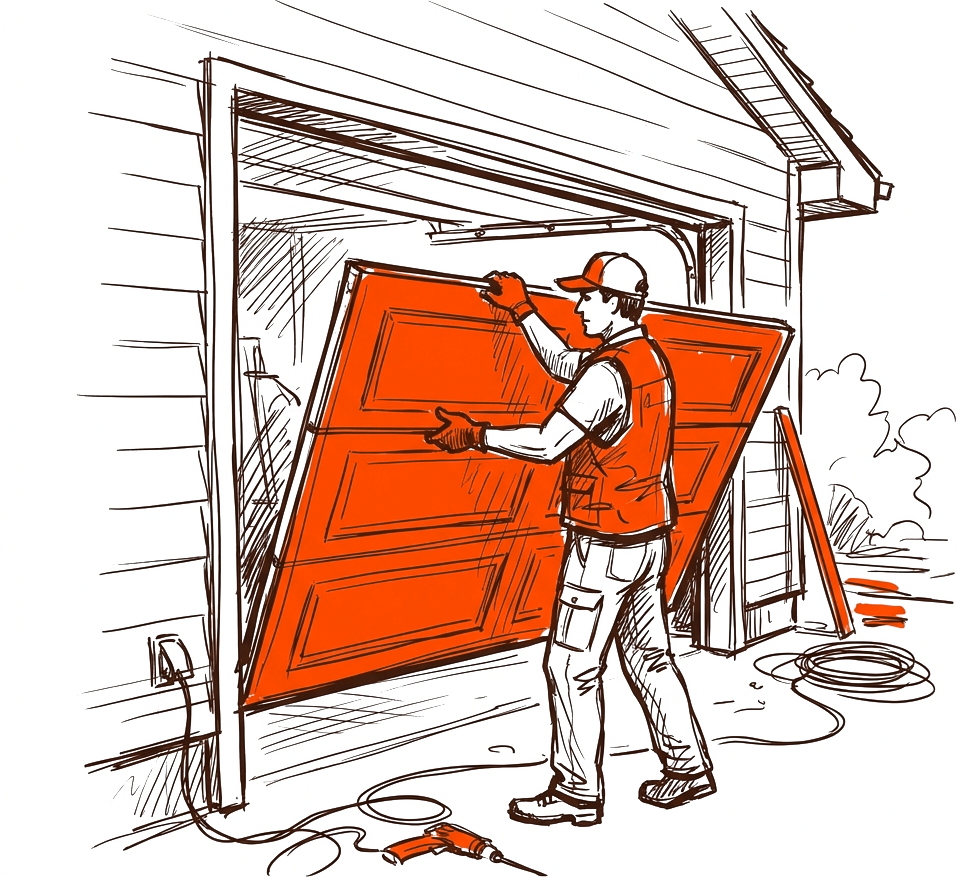
Ask ten garage door pros what they charge per hour and you'll get ten different answers, and half of them are guessing. Most people pick a number that sounds fair, or they match the shop across town, then wonder why the bank account never grows. A real garage door hourly rate isn't a number you copy. It's a number you build, working backwards from the income you actually need to take home.
Key takeaways
- Your hourly rate should start with your target income, not a competitor's price.
- Only a fraction of your workday is billable, so your rate has to cover the unpaid hours too.
- Overhead (truck, insurance, phone, software, fuel) gets baked into every hour or it eats your profit.
- Publish ranges to customers, not promises. Every door, spring, and driveway is different.
Start With the Number That Matters: Your Target Income
Everything works backwards from what you want to earn. Not revenue, not what you invoice, but what actually lands in your pocket after the business takes its cut. Pick a real annual number. Say you want to clear $85,000 for yourself this year. That's your anchor. Every hour you sell has to march toward it.
The mistake is thinking of your rate as a price. Think of it as a machine that has to produce $85,000 plus every dollar it costs to run the business. If the machine doesn't produce that, you're losing money on volume, and no amount of extra jobs fixes a rate that's too low.
Billable Hours Are Fewer Than You Think
Here's the part that trips up almost everyone. You do not bill 40 hours a week. Not close. Between driving between jobs, quoting, ordering springs and openers, answering the phone, invoicing, and chasing payments, a big slice of your week is unbillable.
A solo garage door pro often bills only 20 to 28 hours out of a 40 to 50 hour week. That's typical. The rest is real work, but nobody pays you directly for it. If you set your rate as if all 40 hours are billable, you've already priced yourself into a hole.
Track it for two weeks
Write down every hour: on-the-job vs. driving, quoting, and admin. Most pros are shocked how low their real billable percentage is. That number is the foundation of your rate.
Overhead: The Cost of Being Open
Overhead is everything you pay whether or not the phone rings. It's easy to ignore because no single item feels huge, but together they're the difference between profit and a busy year with nothing to show for it.
- Truck payment, fuel, maintenance, and tires
- General liability and any commercial auto insurance
- Business phone line and software subscriptions
- Tools, ladders, and replacement parts inventory
- Marketing, website, and lead sources
- Licenses, permits, and accounting or tax help
Add these up for the year. A lean solo operation might run $30,000 to $50,000 in overhead. A small crew with two trucks can easily pass $80,000. This number has to be recovered across your billable hours, on top of your take-home pay.
A Worked Example: Building the Rate
Let's put it together for a solo pro. Numbers are illustrative, so plug in your own.
- Target take-home income: $85,000
- Annual overhead: $40,000
- Total the business must produce: $125,000
- Working weeks per year: 48 (four weeks off for holidays, sick days, slow spells)
- Billable hours per week: 25
- Total billable hours per year: 48 x 25 = 1,200
Now divide the money by the hours: $125,000 divided by 1,200 billable hours equals about $104 per hour. That's your break-even-plus-income rate. It is not padded for profit beyond your salary, and it assumes you actually hit 1,200 billable hours.
Want a real profit cushion on top, for growth, a truck fund, and a bad month or two? Add 10 to 20 percent. That puts you in the $115 to $125 per hour range. Suddenly the guy charging $75 down the road looks less like competition and more like someone quietly going broke.
Why the low guy can't be your benchmark
You have no idea what his overhead, billable hours, or take-home actually are. He might be running a truck into the ground and calling it a rate. Copy his number and you inherit his problems.
Why Copying a Competitor's Rate Loses Money
Your rate is personal math. The shop across town might have a paid-off truck, cheaper insurance, a spouse handling the books for free, or a completely different billable-hours ratio. When you copy their number, you're borrowing their cost structure without knowing what it is.
Two garage door businesses in the same zip code can have honest rates that differ by $40 an hour, and both can be right. The customer isn't buying an hour anyway. They're buying a working door, a warranty, someone who shows up, and someone who's still in business next year to honor that warranty. Compete on that, not on being the cheapest hour in town.
Present Ranges, Not Promises
Most garage door work should be quoted as a job, or a range, rather than a raw hourly figure. Customers hear a big hourly number and panic, even when the total is fair. So use your rate internally to build prices, and show the customer a clean number for the outcome.
- Spring replacement: give a typical range, since torsion vs. extension and single vs. double doors change the labor.
- Opener install: quote the job, including haul-away and programming, not the clock.
- Full door replacement: itemize materials and labor, with a range for anything you can't see until you're on site.
- Service call and diagnostic: a flat fee that reflects your travel and unbillable overhead.
Ranges protect you and set honest expectations. When you commit to a flat promise before you've seen a rusted-out double-car setup, you eat the difference. When you frame it as typical, the customer understands that the door in front of you decides the final number.
Brivium helps garage door crews turn that internal rate into clean, branded quotes, keep the schedule tight so more of the week is billable, and get paid on the spot by card so the money you earned doesn't sit in accounts receivable.
Start free trialRevisit the Number, Don't Set It and Forget It
Fuel, insurance, and parts creep up every year. So does what you're worth. Recalculate your rate at least once a year, and any time a truck breaks, insurance jumps, or you add a crew member. Your rate is a living number tied to real costs, not a sticker you slap on the wall and never touch again.
Do the math once, honestly, and you stop guessing. You'll quote with confidence, walk away from work that doesn't pay, and actually hit the income you set out to earn.
Frequently asked questions
What is a typical garage door hourly rate in the US?
Many garage door pros land somewhere in the $90 to $130 per hour range once overhead and target income are factored in, but the honest answer depends on your costs and billable hours. Build your own number instead of copying a range.
Why can't I just match my competitor's hourly rate?
Because you don't know their overhead, billable-hours ratio, or take-home goal. Their rate reflects their cost structure, not yours. Copying it means inheriting problems you can't see.
How many billable hours should I plan for each week?
Solo garage door pros typically bill 20 to 28 hours out of a 40 to 50 hour week. The rest goes to driving, quoting, ordering, and admin. Track yours for two weeks to get a real figure.
Should I quote customers by the hour or by the job?
Quote by the job or as a range for most work. Use your hourly rate internally to build the price, then present a clean outcome-based number so customers aren't scared off by a raw hourly figure.