
Electrical
What Should a Electrical Pro Charge Per Hour?
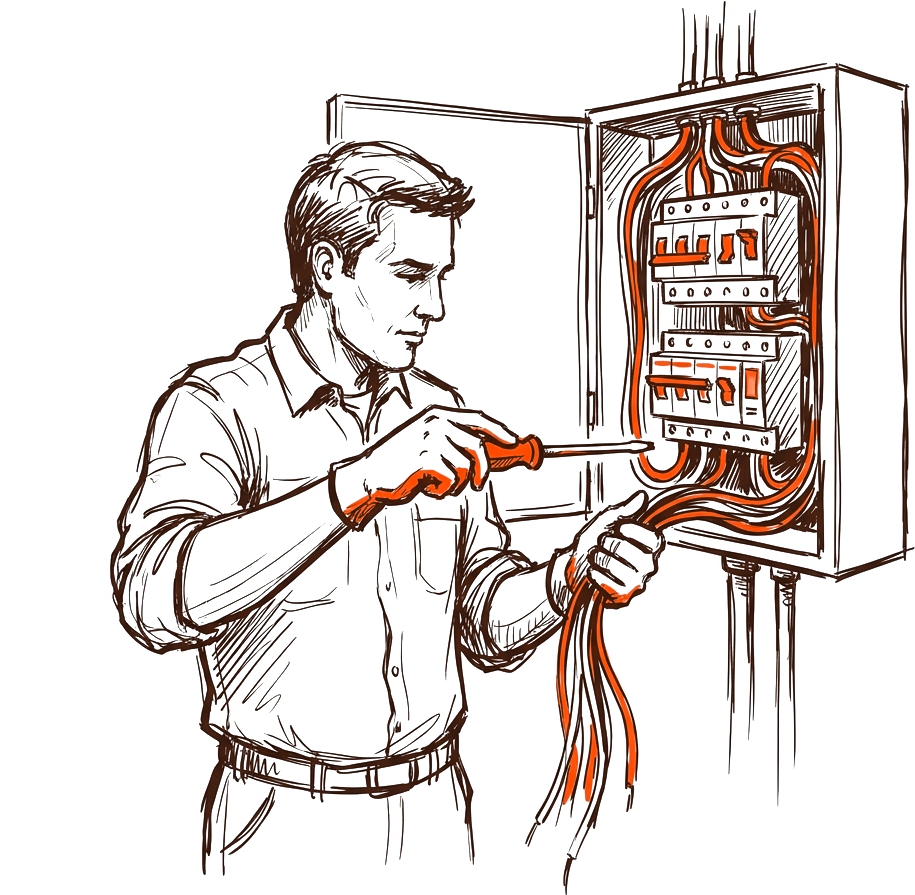
Ask ten electricians what they charge per hour and you will get ten different answers, plus a shrug. Most rates get set by gut feel or by matching the shop down the road. That is a fast way to stay busy and still end the year broke. A real electrical hourly rate works backward from the income you need, then adds up the hours you can actually bill and the overhead you have to cover. This post walks through that math contractor-to-contractor, with a worked example and honest ranges instead of promises.
Key takeaways
- Your rate starts with target take-home pay, not with what competitors charge.
- You bill far fewer hours than you work, so unbillable time has to be baked in.
- Overhead (truck, tools, insurance, software, fuel) gets recovered inside every billable hour.
- Copying a competitor's rate copies their mistakes and their cost structure, not yours.
Why copying a competitor's rate loses money
The guy across town might run a paid-off truck, work out of his garage, and carry no employees. If you match his rate but you have a truck payment, a shop lease, and two guys on payroll, you are running his business on your costs. That gap comes straight out of your pocket. Rates are personal. They depend on your overhead, your target income, and how many hours you can realistically sell. Use competitor rates as a sanity check at the end, never as your starting point.
Start with the number that matters: your target income
Decide what you want to earn in a year before you touch the calculator. Be honest and include everything: your salary, taxes, retirement, and a buffer for slow months. A one-truck owner-operator might target 80,000 to 120,000 in personal income. A shop with crews needs to fund owner pay plus profit on top of labor. Write down one number. Everything else builds from it.
Profit is not the same as your pay
Your salary is a cost of doing business. Profit is what is left after every cost, including your pay, is covered. Aim to build both into the rate. A healthy net profit target for many field-service shops is 10 to 20 percent.
Billable vs unbillable hours: the trap that sinks rates
Here is where most rates fall apart. There are roughly 2,080 work hours in a year (40 hours times 52 weeks). You will not bill anywhere near that. Time disappears into:
- Driving between jobs and to the supply house
- Writing quotes and following up with customers
- Invoicing, chasing payments, and bookkeeping
- Vacation, holidays, sick days, and truck breakdowns
- Callbacks and warranty work you cannot charge for
After all that, a typical field electrician bills somewhere between 1,000 and 1,400 hours a year. That means 30 to 50 percent of your paid time is unbillable. If you set your rate assuming 2,080 billable hours, you have priced yourself to lose money on day one.
Add up your overhead honestly
Overhead is every dollar you spend to stay in business that is not the labor on a specific job. Total it for the year, then it gets recovered across your billable hours. Common line items:
- Truck payment, fuel, maintenance, and insurance
- General liability and workers' comp
- Tools, equipment, and replacements
- Phone, software, and CRM subscriptions
- Licensing, continuing education, and permits
- Marketing, accounting, and legal
- Shop rent or a portion of home costs
For a one-truck operation, annual overhead often lands between 25,000 and 50,000. Do not guess. Pull your bank and card statements and add it up. Missing overhead is the quiet reason rates come out too low.
A worked example: building the rate from scratch
Let us run the math for a solo owner-operator. Adjust the numbers to your own shop, but keep the structure.
- Target personal income: 90,000 per year.
- Add annual overhead: 40,000. Total to cover: 130,000.
- Add profit target of 15 percent on that total: about 19,500. New total: 149,500.
- Estimate billable hours: 1,200 per year (realistic for a solo pro after driving, quoting, and admin).
- Divide: 149,500 divided by 1,200 equals about 125 per hour.
So this electrician needs roughly 125 per billable hour to hit the goal, before materials markup. Notice what happens if you ignore the billable-hour reality and divide by 2,080 instead: 149,500 divided by 2,080 is only about 72 per hour. That 72 number feels competitive, and it is exactly how good electricians go broke. The difference between 72 and 125 is the unbillable time nobody charges for.
Materials are separate
The rate above covers labor and overhead. Mark up materials on top, commonly 15 to 35 percent, to cover the time, risk, and cost of sourcing and warrantying parts. Do not fold material margin into your labor rate and hope it works out.
Flat rate vs hourly, and how to sanity-check your number
Many residential shops present flat-rate pricing to customers even though the rate is built on the hourly math above. Flat rate protects you when a job runs long and removes the awkward clock-watching conversation. Commercial and service-agreement work often stays hourly or time-and-materials. Either way, the underlying cost-per-hour has to be right or the flat prices are wrong too.
Once you have your number, then look outward. If your math says 125 and every shop in your market bills 90, you have two options: cut your cost structure or sell your value better. If the market bills 150 and you calculated 125, you may be leaving money on the table. Use the range to position yourself, not to panic. A defensible electrical hourly rate built on your real costs will always beat a copied one.
Brivium helps you turn that rate into branded quotes customers approve on the spot, then keeps your calendar full with scheduling and gets you paid faster with card payments, so more of your hours actually stay billable.
Start free trialRevisit the rate every year
Fuel, insurance, and material costs move. Your billable-hour count changes when you add a helper or take on bigger jobs. Rerun this math at least once a year, and any time a major cost jumps. A rate set in 2022 and never touched is almost certainly underwater today. Ten minutes with a spreadsheet is cheaper than a year of undercharging.
Frequently asked questions
What is a typical electrical hourly rate in the US?
Ranges vary widely by region and job type, but many service electricians bill roughly 90 to 150 per hour for labor. Your correct rate depends on your overhead, target income, and billable hours, not on the average.
How many hours can an electrician actually bill in a year?
After driving, quoting, invoicing, callbacks, and time off, most field electricians bill between 1,000 and 1,400 hours a year, well below the 2,080 paid hours in a full-time schedule.
Should I match my competitor's hourly rate?
No. Competitors have different trucks, payroll, and overhead. Copying their rate applies their cost structure to your business. Build your rate from your own numbers, then use competitor rates only as a final sanity check.
Do I include materials in my hourly rate?
No. Keep labor and materials separate. Your hourly rate covers labor and overhead, and you mark up materials on top, commonly 15 to 35 percent, to cover sourcing, risk, and warranty.