
Roofing
Should Roofing Contractors Take a Deposit?
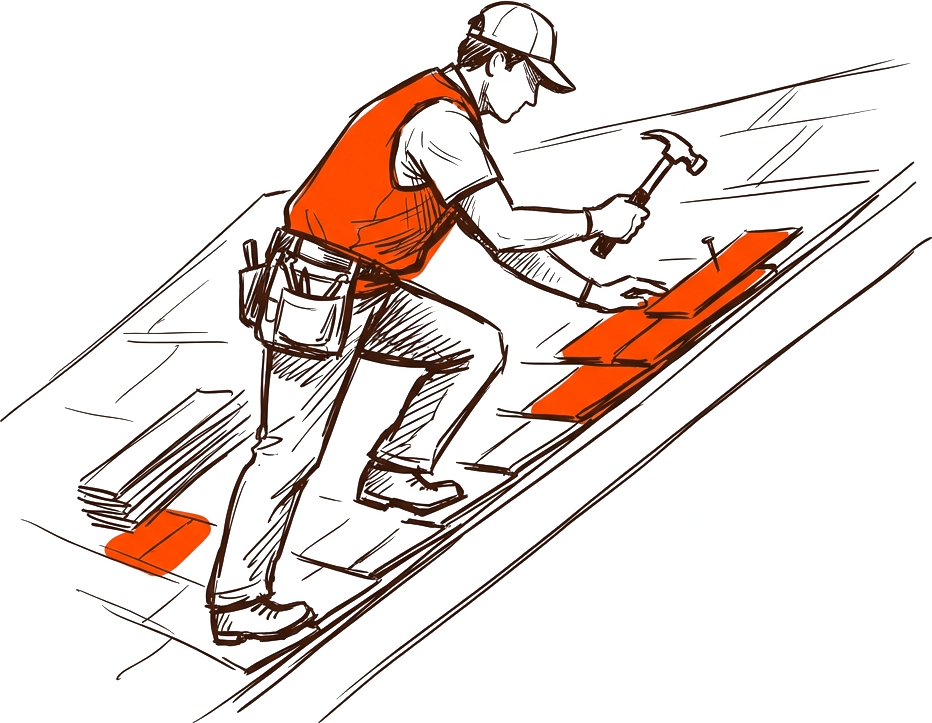
Roofing is a material-heavy trade. You are fronting shingles, underlayment, flashing, and crew labor before a single dollar comes in. So the question comes up on almost every estimate: should you take a roofing deposit? For most residential and light commercial work, the honest answer is yes, and this post covers when to ask, how much, how to explain it without friction, and how a deposit keeps your bank account from doing the heavy lifting on every job.
Key takeaways
- A deposit on material-heavy roofing work protects your cash flow and confirms the customer is serious.
- Typical residential deposits run 10% to 30%, tied to your material cost, not a random number.
- How you explain the deposit matters more than the amount: frame it as ordering materials, not asking for trust.
- Some states cap deposits on home improvement contracts, so check local rules before you set a policy.
Why deposits make sense on roofing jobs
A deposit does two jobs. First, it funds the material order so you are not floating thousands of dollars out of your own operating cash. Second, it filters. A customer who signs and pays a deposit is committed. A customer who stalls at the deposit was likely going to stall at the final payment too, and now you know before you have ordered a pallet of shingles.
On a tear-off and re-roof, materials can be 40% or more of the total price. If you buy those materials and the homeowner backs out, changes the scope, or drags payment, you are exposed. A deposit shifts some of that risk back where it belongs: on the person who ordered the work.
The real reason deposits work
A deposit is not about distrust. It is about matching cash out to cash in. You spend money to start the job, so the customer funds the start of the job. That is a fair trade, and most homeowners already expect it.
When to ask for a deposit (and when to skip it)
Not every job needs the same treatment. Use the size and material load of the work to decide.
- Full re-roofs and tear-offs: yes, always. High material cost and multi-day labor make a deposit standard.
- Large repairs with special-order materials: yes. If you have to order tile, metal panels, or anything non-stock, collect enough to cover the order.
- Small stock repairs under a few hundred dollars: often no. A quick flashing or shingle patch can be collected on completion. Chasing a tiny deposit costs more goodwill than it is worth.
- Insurance jobs: usually collect the deductible up front, then align the rest with the carrier's payment schedule.
When in doubt, ask this: if the customer disappeared tomorrow, how much of my own money is stuck in this job? If the answer is more than you are comfortable eating, take a deposit.
How much should a roofing deposit be?
Tie the deposit to your material cost instead of picking a percentage out of the air. Typical residential deposits land in the 10% to 30% range. The goal is simple: the deposit should at least cover the materials you have to buy before you start.
Here is a worked example on a straightforward asphalt re-roof.
- Total job price: $14,000
- Materials (shingles, underlayment, flashing, fasteners): $5,200
- Labor and overhead: $8,800
If you charge a 30% deposit, that is $4,200. Close to your material cost but slightly short. If you want the deposit to fully fund the order, you might set it at $5,200, which is about 37%. That is on the higher end, so many contractors split the difference: collect a deposit that covers most of materials, then bill a progress payment on the day of tear-off or material delivery.
A clean structure that customers understand:
- Deposit at signing: 25% to 30% to order materials.
- Progress payment at start or delivery: another 30% to 40%.
- Final balance on completion and walkthrough: the remainder.
Check your state rules
Several states cap deposits on home improvement contracts, sometimes at a flat percentage or dollar amount. Before you standardize a 30% deposit, confirm what your state allows so your contract holds up.
How to explain the deposit so the customer says yes
Most deposit resistance comes from surprise, not from the money. If the deposit is buried in fine print or sprung at signing, homeowners get nervous. If you mention it early and tie it to a concrete purpose, it feels normal.
Say it plainly during the estimate: "To hold your spot on the schedule and order your materials, we collect a deposit of X. The balance is due as we go, with the final payment after you have walked the roof with us." That one sentence covers the amount, the reason, and the payoff for the customer, which is a confirmed date and a clear finish line.
- Name the purpose: materials and scheduling, not a favor to you.
- Show the full payment plan up front so nothing feels hidden.
- Put it in writing in the signed quote so both sides agree before work starts.
- Offer a clean way to pay: a card link or tap beats waiting on a mailed check.
When the deposit is easy to pay, more customers pay it on the spot. A homeowner who has to find a checkbook or drive to the bank has more time to hesitate. A quick card payment while you are standing in the driveway closes the loop.
How deposits protect your cash flow
Cash flow, not profit, is what sinks roofing businesses. You can be profitable on paper and still miss payroll if all your money is tied up in materials on jobs that have not paid yet. Deposits break that cycle.
Picture five active re-roofs at once, each with $5,000 in materials. Without deposits, that is $25,000 of your money on the street before any customer pays. With a deposit that covers materials, that number drops toward zero, and you are running the business on the customers' money for the work they ordered, which is exactly how it should be.
Deposits also reduce your reliance on credit lines and supplier terms. Every dollar you collect up front is a dollar you are not borrowing at interest to buy shingles.
Put it in your process, not your memory
A deposit policy only works if it is consistent. If you collect one on some jobs and forget on others, you lose the cash flow benefit and you look unsure to customers. Bake the deposit into your quote template and your signing step so it happens the same way every time.
- Standard deposit line on every quote above a set dollar threshold.
- Deposit due before the job is added to the schedule.
- Payment terms and amounts written into the signed agreement.
- A fast, trackable way to collect so you are not chasing checks.
Brivium keeps this tight: send a branded quote with the deposit built in, let the customer pay by card in a tap, and only lock the job onto your schedule once the deposit clears, so your crew and your cash flow stay in sync.
Start free trialTake the deposit. Explain it early, tie it to materials, keep it consistent, and make it easy to pay. Do that and you will spend less of your own money to start jobs, weed out shaky customers before they cost you, and run a steadier business through busy season and slow season alike.
Frequently asked questions
Is it normal for roofing contractors to ask for a deposit?
Yes. For full re-roofs and material-heavy work, a deposit is standard and most homeowners expect it. It funds the material order and confirms the customer is committed to the schedule.
How much deposit should I charge for a roofing job?
Typical residential deposits run 10% to 30%, ideally enough to cover the materials you buy before starting. Tie it to your actual material cost rather than a random percentage, and check any state caps on home improvement deposits.
What if a customer refuses to pay a deposit?
Explain that the deposit orders their materials and holds their date. If they still refuse on a large job, treat it as a warning sign. A customer who will not fund the start often struggles at final payment too.
Should I take a deposit on small roof repairs?
Usually not. For small stock repairs under a few hundred dollars, it is simpler to collect on completion. Save deposits for larger jobs and any work that requires special-order materials.