
HVAC
Should HVAC Contractors Take a Deposit?
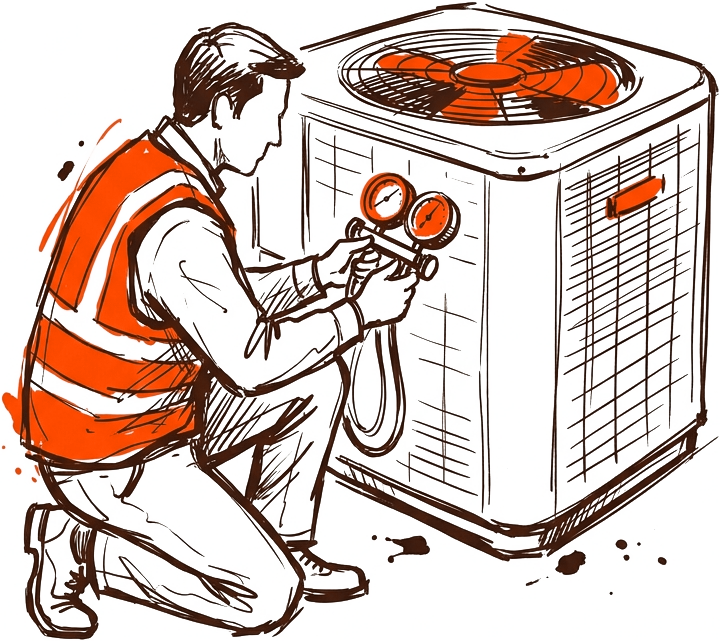
You just landed a system replacement. The equipment alone runs a few thousand dollars, and your supplier wants payment when you pick it up. But the customer says they will "pay when it's done." That gap between your money going out and their money coming in is where a lot of good HVAC shops get squeezed. A deposit closes that gap. The question is not really whether you should take an HVAC deposit, it is when, how much, and how to ask without scaring off the sale.
Key takeaways
- Take a deposit on any material-heavy or install job where you pay for equipment before the customer pays you.
- A 25% to 50% deposit is typical for HVAC installs, scaled to how much of the job cost is parts.
- Skip the deposit on small diagnostic or repair calls; collect on completion instead.
- Explain the deposit as covering equipment and scheduling, not as a trust issue, and put it in writing.
When a Deposit Actually Makes Sense
Not every job needs one. A $200 capacitor swap or a service call does not justify the friction of asking for money up front. You are on and off the property in an hour, and you collect when you finish. Asking for a deposit on that kind of work just makes you look like you are worried about getting paid.
Deposits earn their keep on jobs where you spend real money before the customer spends any. That usually means:
- Full system replacements and new installs
- Jobs with special-order or high-efficiency equipment
- Ductwork or line-set work with significant material cost
- Any project scheduled out more than a week, where you are holding a crew slot
- New customers with no history who are booking a large ticket
The simple test: if the job would hurt to eat if the customer canceled after you ordered parts, take a deposit.
How Much Should You Charge?
There is no legal standard, and some states cap deposits on certain contracts, so check your local rules. That said, a typical HVAC deposit lands between 25% and 50% of the total job. The right number depends on how much of your cost is equipment versus labor.
Think of the deposit as covering your out-of-pocket exposure. If parts are 60% of the job, a 25% deposit still leaves you fronting a lot of cash. Scale the deposit up when the material share is high.
A simple rule of thumb
Set your deposit to at least cover your equipment and material cost on the job. If the customer walks, you are not out of pocket for a warehouse full of a unit you cannot easily return.
A Worked Example
Say you quote a heat pump replacement at $9,000. Your costs break down like this:
- Equipment and materials: $4,500
- Labor and overhead: $3,000
- Profit: $1,500
If you take no deposit, you pay $4,500 to your supplier, block out two days of crew time, and carry all of it until the customer pays after the install. If they delay payment or cancel late, that $4,500 is your problem.
Now take a 40% deposit, which is $3,600. You collect that before ordering equipment. It covers most of your material cost right away, so the job is close to cash-flow neutral before your crew ever shows up. You collect the remaining $5,400 on completion. Same profit, far less risk, and no scramble to float the supplier.
On a shop doing four or five installs a week, that difference is the line between comfortable and constantly chasing money.
How to Explain It So the Customer Says Yes
Most pushback comes from how the deposit is framed, not the deposit itself. Customers order furniture, put deposits on cars, and pay retainers to lawyers. They understand the concept. Your job is to connect it to something concrete.
Never make it sound like you do not trust them. Tie it to the equipment and the schedule instead. Try language like this:
- "The deposit covers your equipment so we can order it and lock in your install date."
- "Once the deposit is in, we secure the unit at today's pricing and reserve your spot on the schedule."
- "You pay the balance once the system is running and you're happy with it."
Put the deposit amount, the balance, and payment terms right on the quote so there are no surprises. When a customer sees it written clearly and professionally, it reads as standard practice, not a red flag. The signature and the deposit should happen together: approving the quote and paying the deposit is one clean step, not two separate conversations.
Make paying easy
The faster and simpler it is to pay, the higher your deposit acceptance. If you make someone write a check or drive cash to your office, you add friction and delay. Let them tap a card or pay from a link the moment they say yes.
Protecting Cash Flow on Material-Heavy Work
HVAC is one of the toughest trades for cash flow because the equipment is expensive and your suppliers usually want to be paid quickly. A single install can tie up thousands before you earn a dollar. Stack a few of those in a busy week and you can be profitable on paper while your bank account is stressed.
Deposits smooth that out. They turn your customers into partial funders of their own jobs, which is exactly how it should work. A few habits make the system reliable:
- Set a standard deposit policy by job type so your team is not guessing every time.
- Collect the deposit before you order equipment, not after.
- Send the balance invoice the same day you finish, while satisfaction is high.
- Track which deposits are collected and which balances are still open so nothing slips.
A deposit policy also filters out tire-kickers. People who are serious about a $9,000 project will pay a deposit. People who are shopping ten contractors and never intended to commit tend to fade away, which saves you from ordering equipment for a job that was never real.
Brivium lets you send a branded quote with the deposit built in, collect the card payment on approval, and drop the job straight onto your schedule, so getting paid up front is one smooth step instead of three phone calls.
Start free trialThe Bottom Line
Take a deposit on install and material-heavy work, keep it in the 25% to 50% range with an eye on covering your equipment cost, and explain it as securing the unit and the date rather than a matter of trust. Skip it on small repairs. Do that consistently and you stop floating your suppliers out of your own pocket, and you protect the profit you actually earned.
The deposit is not about being cautious. It is about running your shop like a business that expects to get paid for the value it delivers.
Frequently asked questions
Is it normal for HVAC contractors to charge a deposit?
Yes, on install and material-heavy jobs it is standard practice. Deposits typically run 25% to 50% and cover the equipment cost so you are not fronting thousands before the customer pays.
How much deposit should I ask for on an HVAC install?
A common range is 25% to 50% of the total. Scale it toward the higher end when equipment and materials make up a large share of the job so your deposit at least covers your out-of-pocket cost.
What if the customer refuses to pay a deposit?
Explain that the deposit secures the equipment and their install date. If they still refuse on a large material-heavy job, treat it as a warning sign. Serious customers on big projects almost always agree once it is framed clearly.
Should I take a deposit on a small repair call?
Usually no. For diagnostics and small repairs where you are done in an hour, collect payment on completion. Deposits are for jobs where you spend significant money on parts before the customer pays.