
Electrical
Should Electrical Contractors Take a Deposit?
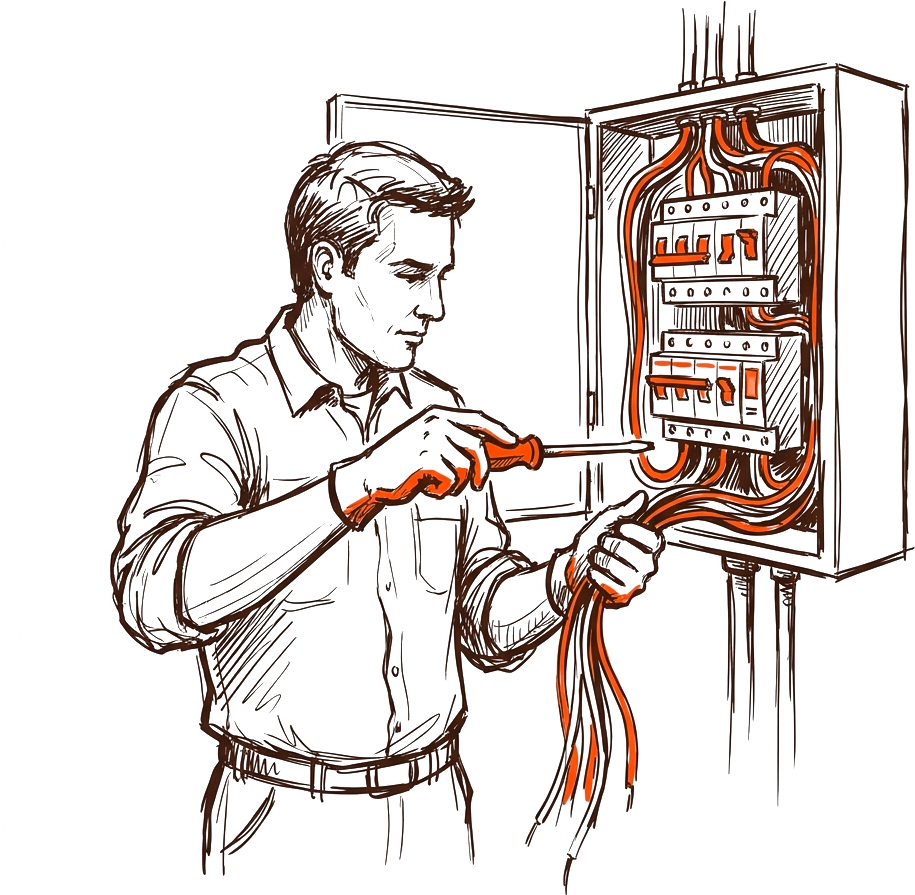
You just priced a panel upgrade. The customer says yes, you order the gear, and now you are floating a few thousand dollars in material on your own card while you wait to get paid. Sound familiar? The question of whether to take an electrical deposit comes down to one thing: who funds the job before the work is done. This post breaks down when a deposit makes sense, how much to ask for, and how to explain it so the customer says yes without blinking.
Key takeaways
- Take a deposit on material-heavy jobs, custom orders, and anything over a few days of labor.
- A typical range is 25% to 50% up front, scaled to how much material you are fronting.
- Frame the deposit as securing the schedule and ordering materials, not as a sign you do not trust them.
- A clear written deposit policy on every quote removes the awkward conversation entirely.
When a Deposit Actually Makes Sense
Not every job needs a deposit. A quick service call or a two-hour troubleshooting visit can be invoiced on completion. You are not carrying real risk there. The deposit conversation matters when your money is tied up before you ever flip a breaker.
Ask for a deposit when any of these are true:
- The job is material-heavy: panels, switchgear, EV chargers, long wire runs, generators.
- You have to special-order or custom-order gear that you cannot return.
- The project spans multiple days or weeks of labor.
- It is a new customer with no payment history with you.
- The total ticket is large enough that a slow-pay would hurt your cash flow.
For a repeat commercial client on net terms, you might skip the deposit and rely on your relationship. For a brand-new residential customer wanting a $12,000 service upgrade, a deposit is just good business.
How Much to Ask For
There is no single right number, but here is how experienced contractors think about it. The deposit should at least cover the material you are fronting, plus a little cushion for your time to get mobilized.
- Standard install jobs: 25% to 35% up front is typical and rarely raises eyebrows.
- Material-heavy or special-order jobs: 40% to 50% so you are not financing someone else's project.
- Large multi-week projects: structure progress payments instead of one big deposit.
Rule of thumb
Your deposit should cover your materials. If you are fronting more cash than the deposit collects, raise the deposit or order materials only after it clears.
A Worked Example
Say you quote a 200-amp panel upgrade with a sub-panel for a detached garage. The numbers look like this:
- Total quote: $8,000
- Materials you must buy up front: $3,200
- Labor and overhead: $4,800
If you take a 25% deposit, that is $2,000. You are still $1,200 short on materials before you have swung a hammer. Bump the deposit to 40%, which is $3,200, and now your material cost is fully covered the moment the deposit clears. You collect the remaining $4,800 on completion, and your own cash never left your account to fund the customer's project.
That is the whole point. A deposit sized to your materials means the job pays for itself as it progresses, instead of you acting as the bank.
How to Explain It So the Customer Says Yes
Most deposit pushback comes from how it is presented, not the deposit itself. Customers are used to paying deposits for contractors, roofers, and HVAC installs. If you sound confident and matter-of-fact, they will too.
Avoid framing it around trust. Never say anything like 'I need a deposit because I do not know you yet.' Instead, tie the deposit to action:
- 'The deposit covers your materials so I can order your panel and gear and lock in today's pricing.'
- 'Once the deposit is in, I'll get you on the schedule for next Tuesday.'
- 'This secures your spot and gets the parts on order so we are not waiting on shipping later.'
Notice that each line gives the customer something: materials ordered, a date on the calendar, pricing locked. The deposit becomes the step that moves their project forward, which is exactly what they want.
Put it in writing
The best time to introduce your deposit is on the quote itself, before the conversation. When it is a line on a professional document, it reads as standard policy, not a special request.
How Deposits Protect Your Cash Flow
Electrical work is one of the most material-heavy trades out there. Copper, panels, breakers, conduit, EV chargers, and generators all cost real money, and prices have been anything but stable. When you front all of that yourself, you are effectively giving your customer an interest-free loan and taking on all the risk if they slow-pay or disappear.
A deposit flips that. Consider a crew running two or three material-heavy jobs at once. Without deposits, you could easily have $10,000 or more of your own cash locked up in gear before any of those jobs pay out. With deposits covering materials, that money stays in your account. You can make payroll, buy the next job's parts, and avoid dipping into a credit line that charges you interest every month.
Deposits also filter out tire-kickers. A customer willing to put money down is a customer who intends to go through with the work. That alone saves you from ordering gear for a job that quietly dies.
Make the Deposit Easy to Say Yes To
The friction is never the deposit. It is the hassle of paying it. If your customer has to write a check, find your mailing address, or wait for you to email bank details, you lose momentum. The easier you make payment, the faster you get funded and get on the calendar.
- Send a clear, branded quote that lists the deposit as a line item.
- Let the customer pay the deposit by card right from the quote.
- Trigger the material order and schedule the start date the moment it clears.
- Collect the balance on completion the same easy way.
Brivium puts your deposit on branded quotes, lets customers pay by card in a tap, and books the job on your schedule the moment the money clears, so your materials are covered before the first breaker goes in.
Start free trialTaking a deposit is not about distrust. It is about running a business where your own cash is not funding other people's projects. On material-heavy electrical work, a deposit sized to your parts is simply how the math should work. Set a clear policy, put it on every quote, and make it effortless to pay. Most customers will say yes before you finish the sentence.
Frequently asked questions
Is it normal for electrical contractors to ask for a deposit?
Yes. For material-heavy or multi-day jobs, deposits are standard practice. Customers expect them for larger electrical work the same way they do for roofing or HVAC installs.
How much deposit should I charge for an electrical job?
A typical range is 25% to 50%. Size it to cover the materials you must buy up front. Standard installs often sit at 25% to 35%, while special-order or heavy-material jobs run 40% to 50%.
What if a customer refuses to pay a deposit?
On a material-heavy job, a refusal is a warning sign. You can offer to order materials only after a deposit clears, or scale the deposit to just cover parts. If they still refuse, weigh the cash-flow risk before proceeding.
Should I take a deposit on small service calls?
Usually not. Quick service calls and troubleshooting visits carry little up-front material cost, so invoicing on completion is fine. Reserve deposits for jobs where your cash is tied up before the work is done.