
Pest Control
Hiring Your First Pest Control Employee
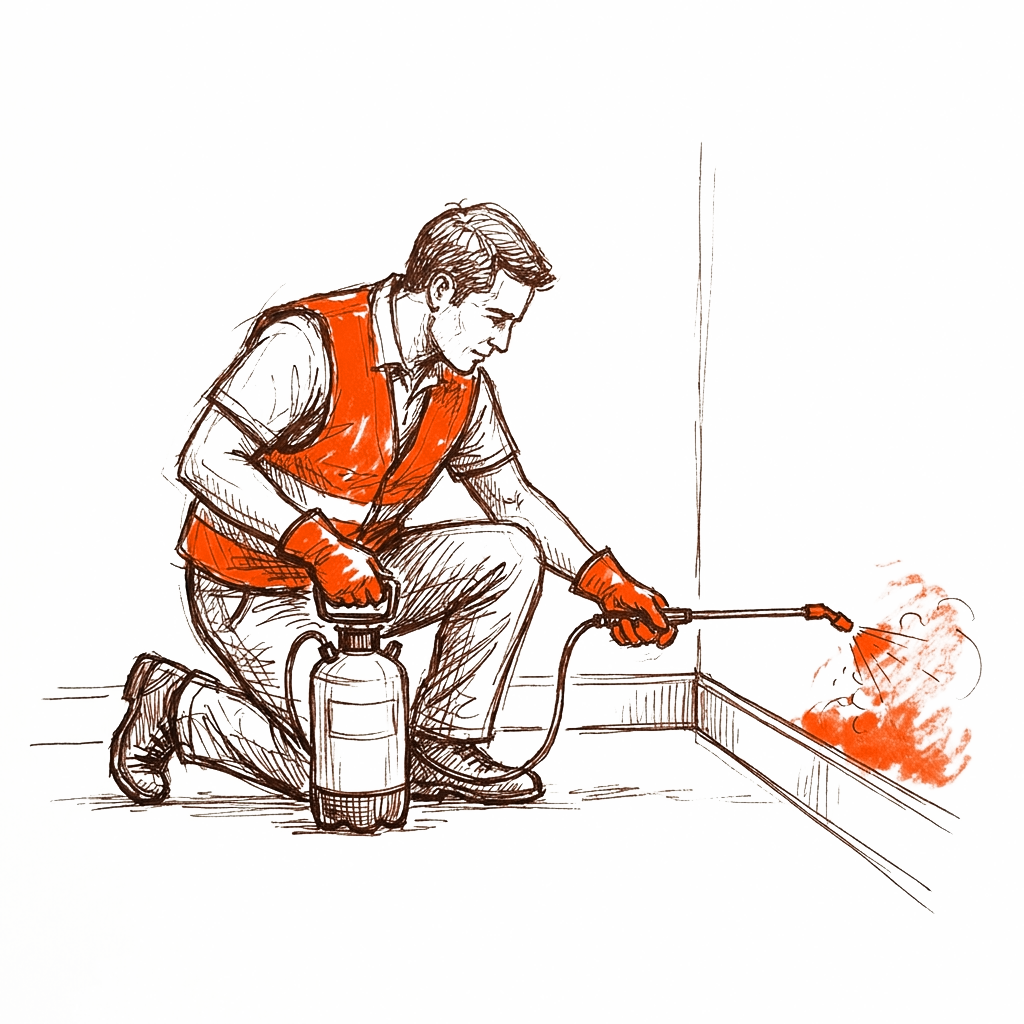
You built your pest control route one account at a time. Now you are turning down work, answering the phone from the cab of your truck, and doing paperwork at 9 PM. That is usually the point where owners start thinking about hiring their first pest control employee. The question is not just whether you need help, it is whether the numbers support it and whether you are ready to hand off work without the quality slipping.
Key takeaways
- Hire when you are consistently turning away jobs and your calendar is booked 2 to 3 weeks out, not just on your busiest week.
- Your first hire should take over the routine, repeatable work so you can keep selling and quoting.
- Budget for roughly 1.25 to 1.4 times the wage once you add taxes, insurance, and vehicle costs.
- Coordination breaks down fast with two people in the field unless schedules, routes, and job notes live in one shared system.
Know When the Numbers Justify a Hire
Being busy is not the same as being ready. A single huge week can trick you into hiring too early, and then you are covering a payroll you cannot fill. Look for a steady pattern instead: your schedule is booked out 2 to 3 weeks, you are turning away jobs most weeks, and you have a backlog of quotes you have not had time to send.
The rough test is simple. A new tech needs to generate enough revenue to cover their fully loaded cost plus a margin. If you cannot keep them busy at least 30 to 35 billable hours a week within a month or two, you probably need more demand before you add a seat.
A worked example
Say you pay a tech $22 an hour. Once you add payroll taxes, workers comp, general liability, fuel, and vehicle wear, your fully loaded cost is typically around 1.3 times the wage, so about $28.60 an hour. At 35 billable hours a week that is roughly $1,001 in direct cost.
Now the revenue side. If that tech runs 6 to 8 service stops a day at an average ticket of $120, and they bill 35 hours across the week, you might see $2,800 to $3,600 in weekly revenue from their work. After their loaded cost, chemicals, and overhead, you are keeping a real margin. If your demand only supports 15 billable hours a week, the math flips and you lose money. Run your own numbers before you post the job.
Quick gut check
If you had a reliable tech starting Monday, could you fill their first two weeks right now without scrambling? If yes, the demand is probably there. If no, focus on sales first.
Decide What to Delegate First
The instinct is to hand off the jobs you hate. The better move is to hand off the work that is routine, repeatable, and lower risk, while you keep the parts of the business that only you can do: selling, quoting, and judgment calls on tricky infestations.
For most pest control owners, the first things to delegate are recurring maintenance routes: quarterly perimeter treatments, standard rodent station checks, and mosquito or general pest reservice visits. These have a clear scope, a predictable product list, and low variability. They are perfect for a newer tech to learn on while you keep the inspections and new-account walkthroughs.
- Delegate first: recurring quarterly and monthly routes, station checks, reservice callbacks.
- Delegate later: new-customer inspections, termite work, complex wildlife exclusion, anything needing upsell judgment.
- Keep for now: quoting, closing, and handling upset customers until the tech earns trust.
Hire for Attitude and License Fit
In pest control you are hiring someone who will represent you inside people's homes and around their kids and pets. Reliability and professionalism matter more than raw experience, because you can train the application work but you cannot easily train showing up on time and being honest about what they did.
Know your state rules before you post. Most states require a licensed or certified applicator, with specific rules for apprentices or technicians working under a certified operator. Decide whether you are hiring a fully licensed tech at a higher wage, or an unlicensed helper you will train and sponsor toward certification. The second path costs less up front but takes longer to become fully productive.
- Confirm your state's licensing and supervision requirements for new technicians.
- Write a short, honest job post: routes, hours, truck, pay range, and growth path.
- Do a working interview or ride-along so you both see the fit before day one.
- Set a 30, 60, 90 day plan with clear expectations for each stage.
Keep Jobs Coordinated Once There Are Two of You
This is where most first-time crews stumble. When it is just you, the schedule lives in your head and the job notes live in your memory. The moment a second person is in the field, that stops working. You get double-booked stops, missed reservices, and customers who tell your tech something different than they told you.
You need one shared source of truth: a schedule both of you can see, job details and gate codes attached to each stop, and a clean way for the tech to mark a job done and note what was applied. Paper tickets and text messages fall apart by the third week. The goal is that your tech can roll up to any address and know the pet situation, the last product used, and what the customer expects, without calling you.
Protect your route data
Your recurring accounts and service history are the real asset in a pest control business. Keep them in a system you own, not scattered across one tech's phone, so nothing walks out the door if someone leaves.
Set Up Pay, Pricing, and Cash Flow Before Day One
Decide how you pay before the first paycheck is due. Hourly is simplest and fairest while a tech is learning your routes. Some owners move to a per-stop or commission model later once the tech is fast and trustworthy, but starting there can push a new person to rush and cut corners.
Also tighten up collections. With two people generating invoices, slow payment hurts faster because your payroll is fixed even when customer payments lag. Invoice the same day as service and make it easy for customers to pay on the spot. Getting paid at the door beats chasing checks later, every time.
Brivium keeps your routes, branded quotes, and scheduling in one place so your new tech sees every stop's details, and card payments at the door help you get paid before payroll is due.
Start free trialGive It Time and Track the Real Numbers
Your first hire will not be fully productive on day one, and your margins may dip for a month or two while they learn your routes and chemistry. That is normal. Track billable hours per tech, revenue per stop, and callback rate so you know whether the hire is working. If callbacks climb, slow down and retrain. If billable hours stay low, the issue is demand, not the person. Honest tracking is what turns a risky first hire into the foundation of a real crew.
Going from solo to a crew is the hardest jump in a pest control business, because you stop being just a technician and start being an owner who manages people. Do the math first, delegate the routine work, keep everything in one shared system, and give your new tech a fair shot to get up to speed.
Frequently asked questions
How do I know if I can afford my first pest control hire?
Figure your fully loaded cost at roughly 1.25 to 1.4 times the hourly wage, then confirm you have enough steady demand to keep that tech billing at least 30 to 35 hours a week within a month or two.
What should I delegate first when I hire a pest control technician?
Start with routine, low-risk recurring work like quarterly perimeter treatments, rodent station checks, and standard reservice visits. Keep inspections, quoting, and complex jobs for yourself until the tech earns trust.
Does my first employee need a pesticide applicator license?
It depends on your state. Many states allow unlicensed technicians to work under a certified applicator, with rules about supervision and apprenticeship. Check your state requirements before posting the job.
How do I keep jobs coordinated with two people in the field?
Use one shared schedule with job details, gate codes, pet notes, and service history attached to each stop, plus a simple way for the tech to mark jobs done. Paper tickets and texts break down quickly.