
HVAC
Hiring Your First HVAC Employee
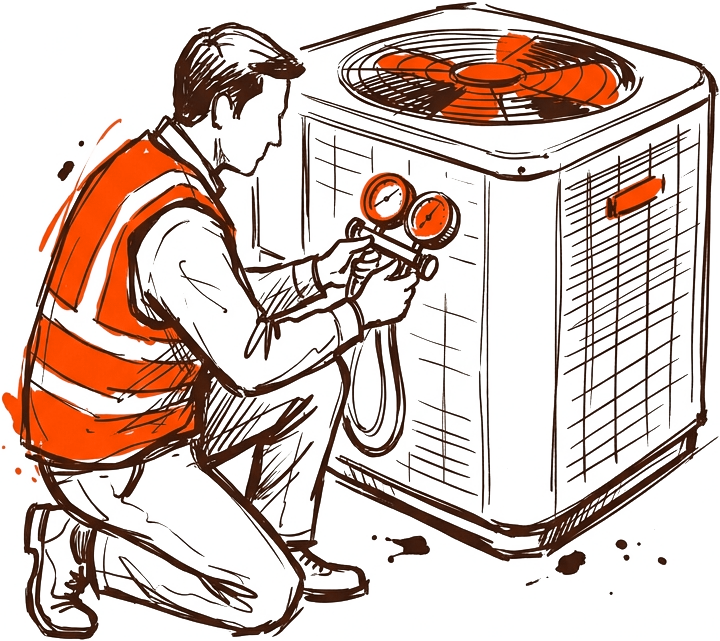
Going from a one-truck operation to a crew is one of the scariest jumps an HVAC owner makes. You are trading a known headache (too much work, not enough hours) for an unknown one (payroll, training, and trusting someone else to represent your name on a customer's roof). The good news: if you time it right and delegate the right things first, your first hiring HVAC employee decision can buy back your calendar instead of blowing up your margins. Here is how to think it through, from the real numbers to the day-to-day coordination.
Key takeaways
- Hire when you are consistently turning down or delaying profitable work, not just when you feel busy.
- A first hire needs to generate roughly 2 to 3 times their fully loaded cost to be worth it.
- Delegate the repeatable, lower-skill work first: maintenance, filter changes, and installs under supervision.
- Coordination breaks down fast with two trucks, so lock in one shared schedule before day one.
When the numbers actually justify a hire
Feeling slammed is not the same as being ready to hire. Plenty of owners add a body during a busy stretch, then eat the cost through a slow month. The cleaner signal is demand you are losing: calls you cannot return, jobs booked two or three weeks out when customers want next week, or overtime you are working just to stay even. If you are regularly saying no to profitable work, that is revenue walking out the door.
Run the math before you post a job. A first HVAC hire in the US is rarely just their hourly wage. You are paying for taxes, workers' comp (which is steep in this trade), tools, phone, and often a second vehicle or at least fuel and insurance on one.
Fully loaded cost rule of thumb
Take the hourly wage and add 25 to 40 percent for taxes, insurance, and overhead. That is your true cost per hour, and it is the number your estimating should be built around.
A worked example
Say you bring on a mid-level tech at $26 an hour. Add 35 percent for payroll taxes, workers' comp, and basic overhead, and your fully loaded cost is about $35 an hour, or roughly $5,900 a month at 40 hours a week.
Now the revenue side. A good HVAC rule is that a billable tech should generate 2.5 to 3 times their loaded cost to cover shop overhead and leave profit. At 3x, this hire needs to produce around $17,700 a month in revenue.
- If your average service call grosses $350 and the tech completes 4 a day, that is $1,400 a day.
- Across roughly 21 working days, minus a realistic 20 percent for drive time, callbacks, and gaps, you are looking at about $23,500 a month in capacity.
- That clears the $17,700 target with room to spare, which tells you the hire pencils out IF you can keep them booked.
The last line is the whole game. The hire only works if you can feed them steady work. If your pipeline cannot keep a second truck busy four days out of five, you are not ready yet. Fix the lead flow first.
What to delegate first
The instinct is to hand off the jobs you hate. The smarter move is to hand off the work that is repeatable and lower risk, so a new person can succeed quickly and you can still sleep at night. Your reputation is riding on whoever you send out.
- Maintenance and tune-ups: predictable scope, hard to mess up badly, great for building a new tech's confidence and customer rapport.
- Filter changes, basic repairs, and warranty callbacks: routine work that eats your day but does not need your judgment.
- Install labor under your supervision: let them do the sweat equity while you handle startup and commissioning.
- Diagnostics and sold repairs last: keep the high-stakes troubleshooting and the upselling with you until you trust their work fully.
Hold onto estimating and customer-facing quotes early on. Pricing is where margin lives or dies, and a new hire guessing at numbers in a customer's kitchen can cost you more than their wage.
Hire the attitude, train the skill
In HVAC you can teach refrigerant charging. You cannot easily teach showing up on time, calling the customer when running late, or not leaving a mess in someone's hallway. For your first hire especially, character and reliability beat a long resume.
Be honest in the interview about what the job actually is: attics in July, crawlspaces, on-call rotations, early starts. The people who flinch are doing you a favor by flinching now. Check references with real questions, like whether they would rehire the person and why they left.
Protect yourself on paper
Get an EIN, set up payroll (a service is worth it), confirm your workers' comp covers the new role, and classify them correctly. A first employee is a W-2, not a 1099, if you are directing their work and schedule. Misclassification penalties are not worth the shortcut.
Keeping two trucks coordinated
Solo, you held the whole schedule in your head. With two people in the field, that falls apart within a week. Double-booked slots, a tech sitting in a driveway with no job details, or a customer who got told two different arrival times will cost you the reputation you spent years building.
Everyone needs to see the same schedule, the same job notes, and the same customer history in real time. The specifics that have to travel with every job:
- Address, gate codes, and the exact scope of work.
- What the customer already paid or still owes.
- Equipment history and any photos from prior visits.
- A clear way for the tech to mark a job done and collect payment on the spot.
The goal is that your tech never has to call you to ask what to do next, and you never have to wonder whether they got paid at the house. When that information flows without you being the bottleneck, you can finally take on more work instead of becoming the dispatcher for your own crew.
Brivium keeps your whole crew on one shared schedule, sends branded quotes customers can approve from their phone, and lets your tech collect card payments at the job so you get paid before they leave the driveway.
Start free trialThe first 90 days
Do not throw a new tech solo on day one. Ride along for the first week, then shadow in reverse while they lead and you observe. Set a simple expectation for callbacks: track them, review them without blame, and use them to find training gaps. A rising callback rate is your earliest warning that something is off.
Give feedback weekly at first, not at some distant review. Most first hires that fail do so quietly over a couple of months because nobody told them what good looked like. Say it early, say it often, and keep it specific.
Hiring your first HVAC employee is how a job becomes a business. Get the numbers right, delegate the repeatable work, and put one clear system between you and your crew. Do that and the second truck stops being a risk and starts being the thing that gives you your evenings back.
Frequently asked questions
How much work do I need before hiring my first HVAC employee?
Enough to keep a second tech busy roughly four days out of five on an ongoing basis. A good target is revenue capacity of about 2.5 to 3 times the hire's fully loaded cost. If your pipeline cannot sustain that, fix lead flow first.
Should my first HVAC hire be a W-2 employee or a 1099 contractor?
If you set their schedule, direct their work, and provide tools or a truck, they are legally a W-2 employee in nearly every case. Misclassifying them as a 1099 to save on taxes can trigger serious penalties, so set up proper payroll.
What should I delegate first to a new HVAC tech?
Start with repeatable, lower-risk work: maintenance, tune-ups, filter changes, and basic repairs, then install labor under your supervision. Keep diagnostics, estimating, and customer quoting with you until you fully trust their judgment.
How do I keep two HVAC trucks coordinated without being on the phone all day?
Put everyone on one shared schedule with job details, customer history, and payment status visible in real time. When your tech can see the scope, mark a job done, and collect payment on site, you stop being the bottleneck.