
Roofing
How to Start a Roofing Business
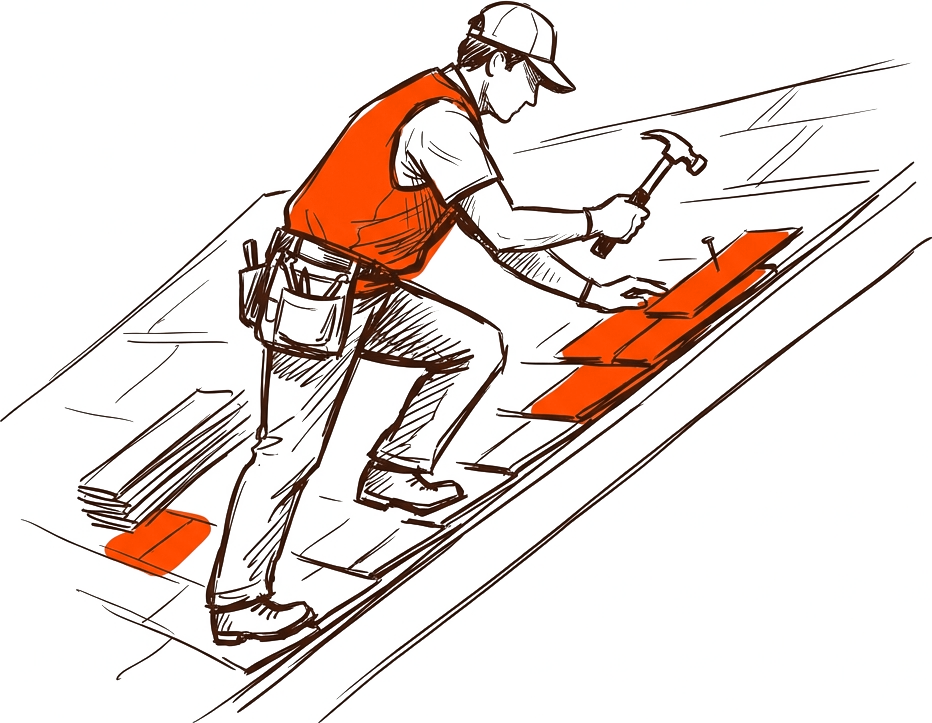
You know how to tear off a roof, dry it in, and leave a clean jobsite. Running the business behind that work is a different skill set. This guide walks through the practical steps to start a roofing business in the US: getting legal, getting insured, pricing jobs so you actually make money, landing your first clients, and setting up the tools that keep the paperwork from eating your evenings.
Key takeaways
- Handle licensing and insurance first. Requirements vary by state and city, so confirm locally before you bid.
- Price from your real costs, not a competitor's number. Know your overhead and target margin on every job.
- Your first clients come from referrals, local reputation, and fast, professional follow-up on every lead.
- Simple systems for quotes, scheduling, and payments beat a shoebox of receipts every time.
Get Legal: Business Structure, Licensing, and Permits
Before you bid a single job, set up the legal foundation. Most new roofers form an LLC to separate personal and business finances, but a sole proprietorship or S-corp may fit your situation. A quick conversation with a CPA or attorney pays for itself here.
Licensing is where roofing gets state-specific. Some states require a contractor license with an exam, bonding, and proof of experience. Others handle it at the city or county level, and a few have light requirements. Permits are usually pulled per job and per locality. The short version: check your state's licensing board and your local building department before you promise work.
- Choose a business structure and register your entity with your state.
- Get an EIN from the IRS and open a dedicated business bank account.
- Confirm state and local contractor licensing requirements and apply.
- Register for state sales tax if your state taxes materials or labor.
- Learn the local permit process so you can pull permits quickly on jobs.
Not legal advice
Rules change and vary widely by location. Treat this as a starting checklist, then verify the specifics with your state board and a local pro.
Insurance and Safety You Cannot Skip
Roofing is high-risk work, and clients, GCs, and suppliers will ask for proof of coverage. Skipping insurance to save money is a fast way to lose everything after one accident or claim.
- General liability: covers property damage and injury claims from your work.
- Workers' compensation: typically required once you have employees, and often expected even for crews of one in some states.
- Commercial auto: for trucks and trailers used on the job.
- Tools and equipment coverage: replaces stolen or damaged gear.
On the safety side, set up fall protection, ladder, and PPE standards from day one. OSHA compliance protects your crew and keeps your insurance costs in check. Document a basic safety plan even if it is just one page to start.
Price Jobs So You Actually Keep Money
Underpricing is the number one killer of new roofing companies. A number that looks like a win on paper can lose money once overhead, waste, and callbacks are counted. Build your price from the ground up: materials, labor, overhead, then margin.
Here is a simplified worked example for a typical asphalt shingle residential reroof at roughly 25 squares:
- Materials (shingles, underlayment, flashing, fasteners, disposal): about 5,500 dollars
- Labor (tear-off and install): about 4,500 dollars
- Permit, dump fees, and misc: about 800 dollars
- Direct cost subtotal: about 10,800 dollars
Now add overhead. If your monthly overhead (insurance, truck, phone, software, advertising) runs 6,000 dollars and you complete about 8 jobs a month, that is 750 dollars of overhead per job. Add that to get a true cost near 11,550 dollars. To hit a 25 percent gross margin, divide by 0.75: that puts your price around 15,400 dollars. If you had bid 13,000 to beat a competitor, you would have left most of your profit on the table.
Know your numbers per square
Track your real cost per square over your first several jobs. Once you know it, estimating gets faster and far more accurate.
Land Your First Clients
Early on, you are selling trust more than price. People want to know their roof is in good hands. Focus on channels that build local credibility fast.
- Referrals: ask every happy customer for one, and leave door hangers on the neighboring houses after a job.
- Google Business Profile: claim it, add photos of completed roofs, and ask for reviews.
- Local partnerships: real estate agents, property managers, and general contractors send steady work.
- Insurance restoration work: storm damage can be a strong early niche if you learn the claims process.
- A simple website with real project photos, your service area, and a phone number that gets answered.
Speed wins deals. The contractor who responds first and sends a clean, professional quote often gets the job, even at a higher price. Treat every lead like it matters, because the person comparing three bids remembers who was easy to work with.
Set Up the Tools to Run the Business
In the first year, most roofers drown in admin: chasing signatures, remembering who got quoted what, scheduling crews around weather, and tracking which invoices are still unpaid. The right systems turn that chaos into a repeatable routine.
- Quoting: branded estimates you can send from your phone the same day you inspect the roof.
- Scheduling: a shared calendar so your crew knows where to be, with easy rescheduling for rain days.
- Invoicing and payments: send invoices fast and accept card payments so you stop waiting on checks.
- A business phone line: keep work calls separate and make sure leads never hit a dead end.
- Job tracking: one place to see every job's status from quote to paid.
You can stitch these together from separate apps, but the handoffs cost you time. An all-in-one setup means a quote becomes a scheduled job becomes an invoice without re-entering anything.
Brivium puts your branded quotes, scheduling, card payments, and a dedicated business line in one place, so a new roofing crew can look established and get paid faster from day one.
Start free trialPlan for Cash Flow and Growth
Roofing is cash-intensive. You often buy materials before you get paid, and one slow-paying customer can squeeze payroll. Protect your cash from the start.
- Collect a deposit before ordering materials, commonly a portion of the job total.
- Invoice the balance the day the job passes final inspection, not a week later.
- Keep a reserve fund to cover at least a few weeks of overhead.
- Reinvest early profits into reliable equipment and marketing, not just a bigger truck.
As you grow, your bottleneck shifts from finding work to delivering it with consistent quality. Document your process, hire slowly, and keep your estimating accurate. The companies that last are not always the busiest, they are the ones that stay profitable on every job.
The Bottom Line
Starting a roofing business comes down to a handful of fundamentals done well: get legal and insured, price from your real costs, win trust with fast and professional service, and run the back office with tools that save you hours. Nail those, and you build something that holds up in any season.
Frequently asked questions
How much does it cost to start a roofing business?
Startup costs vary widely, but many new roofers begin with a truck, basic tools, insurance, licensing fees, and marketing. Material deposits on early jobs are often the biggest cash demand, so plan for that alongside your fixed startup expenses.
Do I need a license to start a roofing business?
It depends on your state and sometimes your city or county. Some states require a contractor license with an exam and bonding, while others regulate roofing locally. Always confirm requirements with your state board and local building department before bidding.
How do I price a roofing job?
Build your price from direct costs (materials, labor, fees), add your share of monthly overhead per job, then apply a target margin. For example, divide your true cost by 0.75 to aim for a 25 percent gross margin. Track your real cost per square to estimate faster.
How do I get my first roofing clients?
Lean on referrals, a claimed Google Business Profile with reviews and project photos, and local partnerships with agents, property managers, and general contractors. Respond to leads fast and send clean, professional quotes to win trust early.