
Pest Control
How to Start a Pest Control Business
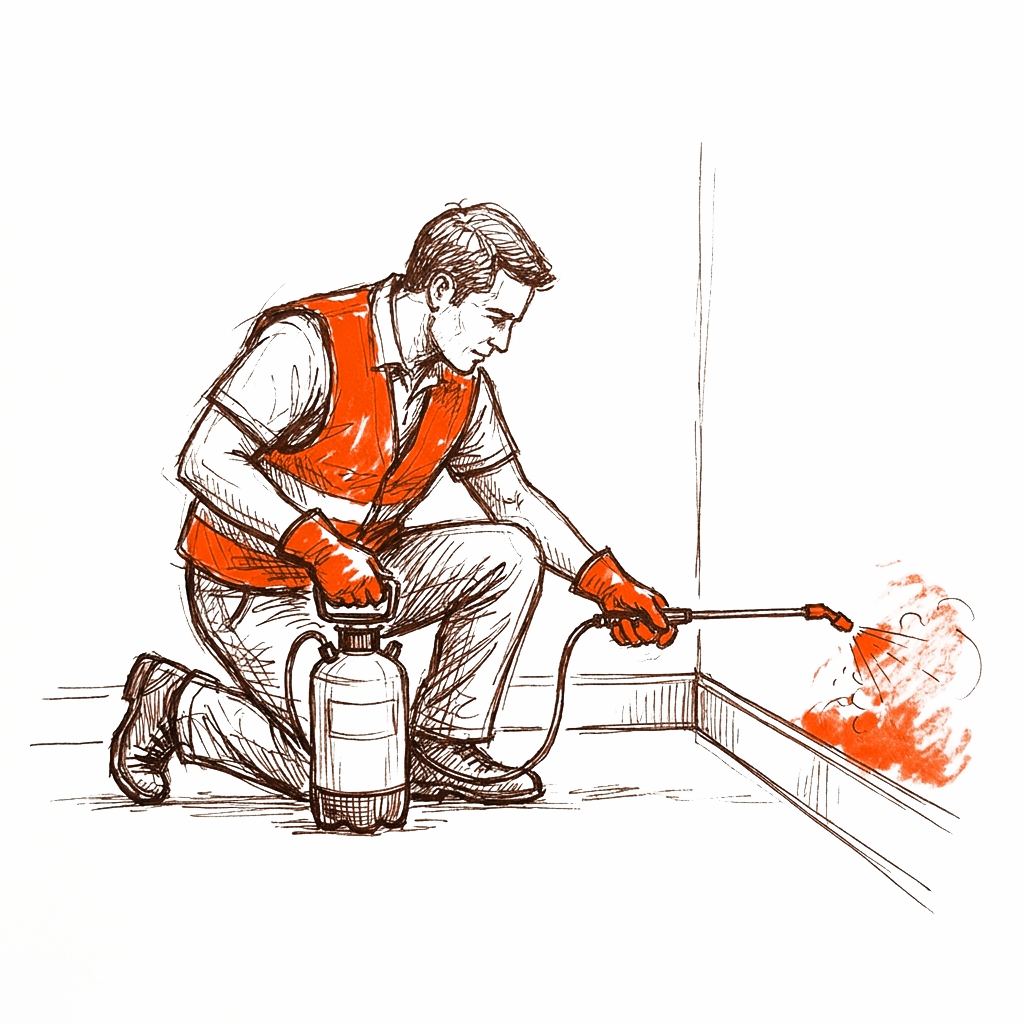
Starting a pest control business is one of the more doable trades to break into: low equipment cost compared to HVAC or plumbing, steady recurring demand, and routes that build on themselves once you land a neighborhood. The tricky parts are licensing, pricing your first jobs so you actually make money, and getting a handful of paying customers before the referrals start rolling. This guide walks through the basics in plain language, with a worked example so you can see the numbers.
Key takeaways
- Most states require a pesticide applicator license plus general liability insurance before you treat a single property.
- Recurring plans (quarterly or bimonthly) are the backbone of a profitable pest control business, not one-off jobs.
- Price from your cost of chemical, drive time, and labor, then add margin. Don't guess off a competitor's door hanger.
- A simple system for quotes, scheduling, and getting paid matters as much as your sprayer on day one.
Get Licensed and Insured First
Pest control is regulated at the state level, and the rules vary a lot. This is general information, not legal advice, so confirm everything with your state agriculture or environmental department before you operate. That said, almost everyone needs the same basic pieces.
- Pesticide applicator license or certification. Usually a core exam plus a category exam (general household pest, termite/wood-destroying organisms, lawn, etc.). Some states require experience hours before you can test.
- Business license or registration. Register your LLC or sole prop with your state and get an EIN from the IRS.
- General liability insurance. Clients and commercial accounts will ask for a certificate. Typical starter policies run a few hundred to a couple thousand dollars a year depending on coverage and state.
- Commercial auto and workers' comp. Required in most states once you have employees, and smart even when it's just you in the truck.
Termite work is its own animal
Wood-destroying organism (WDO) inspections and termite treatment often require a separate category and extra bonding. Many new owners start with general household pest control and add termite later once they have cash flow.
Choose Your Niche and Service Mix
You can't be everything on day one. Pick a lane that matches your license, your market, and your startup budget. The most common starting points:
- General pest (ants, roaches, spiders, rodents). Lowest barrier, highest volume, easiest to build recurring routes.
- Mosquito and tick. Seasonal but high-margin in the right climate, and great for quarterly add-ons.
- Bed bugs. Higher ticket, more complaints and callbacks, needs process discipline.
- Termite and WDO. Higher revenue per job but more licensing and real estate relationships to chase.
Most successful solo operators start with general pest on recurring plans, then bolt on mosquito or rodent exclusion as upsells. Recurring revenue is what makes this business worth owning. One-off bug jobs pay the bills; quarterly plans build the asset.
Price So You Actually Make Money
New owners lose money three ways: underpricing to win work, forgetting drive time, and skipping the fuel and chemical math. Build your price from the ground up instead of copying the cheapest guy in town.
A worked example
Say you're quoting a standard quarterly general-pest plan on a typical single-family home. Here's a rough cost stack for one visit:
- Chemical and bait: about $8 per treatment.
- Fuel and vehicle wear: about $7 for the round trip.
- Your labor: 45 minutes on site plus 20 minutes driving, so roughly 1 hour at a $35/hour loaded rate equals $35.
- Overhead allocation (insurance, software, phone, admin): about $10 per job.
That's roughly $60 in cost per visit. If you charge $120 per quarterly visit, your gross is about $60, or a 50% margin before taxes. Over a year that one account brings in $480. Now multiply: 100 quarterly accounts at that rate is $48,000 in recurring revenue, and that's before any mosquito add-ons, rodent exclusions, or one-off calls. The point isn't the exact figures, it's that you must know your per-visit cost before you name a price.
Watch the first-visit discount trap
Offering a cheap or free initial service to win a contract is fine, but only if the recurring price holds. Discount the start, never the plan.
Land Your First 10 Clients
You don't need a marketing budget to get started, you need to be visible and easy to hire. Early customers come from a short list of reliable channels:
- Set up a Google Business Profile and ask every happy customer for a review. Local search is where pest buyers look first.
- Door hangers and yard signs in a neighborhood you're already servicing. Density beats spread: 10 homes on one street is better than 10 across the county.
- Tell your network. Realtors, property managers, and landscapers refer pest work constantly.
- List on a couple of lead platforms to prime the pump, but treat them as a supplement, not your foundation.
- Respond fast. The company that answers the phone and sends a quote same day usually wins the job.
Speed and professionalism close more deals than the lowest price. A clean written quote that lands in a customer's inbox 20 minutes after the call signals you'll show up on time too.
Set Up the Tools to Run the Business
On day one your gear list is short: a quality sprayer, a dust applicator, bait, PPE, a reliable truck, and a way to run the office side. That last part is where new owners get buried. Juggling quotes in a notebook, scheduling in a text thread, and chasing checks by mail will cap how many accounts you can handle.
Build these systems early, before you're slammed:
- Quotes: branded, itemized, and sent same day.
- Scheduling: recurring routes so quarterly visits auto-populate and nothing slips.
- Invoicing and payments: card on file for recurring plans so you're not chasing money.
- A business phone line: keep work calls off your personal cell and never miss a lead.
- Job history: notes, chemicals used, and photos per property for compliance and callbacks.
Brivium pulls these pieces into one app so you can send a branded quote, schedule the recurring route, and get paid by card on file without stitching together five tools.
Start free trialPlan for Growth and Retention
Once you're past the first dozen accounts, the game shifts from finding customers to keeping them and adding density. Churn quietly kills pest control businesses: every account you lose is recurring revenue gone. Track your retention, follow up on missed visits, and make rescheduling painless.
- Offer annual prepay with a small discount to lock in cash and reduce churn.
- Upsell existing customers (mosquito in spring, rodent exclusion in fall) before chasing new ones.
- Route-cluster new jobs near current ones to cut drive time, which raises your margin per hour.
- Watch two numbers monthly: recurring revenue and callback rate. Rising callbacks mean a process problem, not a chemical problem.
Start lean, price with your real costs, and treat the office systems as seriously as the field work. Do that, and a solo truck can grow into a route-dense operation in a couple of seasons.
Frequently asked questions
How much does it cost to start a pest control business?
Many solo operators start for a few thousand dollars: licensing and exam fees, insurance, basic equipment like a sprayer and PPE, and software. If you already have a work truck, your biggest early costs are usually insurance and getting licensed.
Do I need a license to spray pesticides commercially?
In almost every US state, yes. You typically need a pesticide applicator license or certification, often a core exam plus a category exam. Rules vary, so confirm with your state agriculture or environmental department before treating any property.
How do pest control companies price recurring plans?
Price from your real per-visit cost: chemical, fuel, drive time, labor, and overhead, then add margin. Most profitable companies build their business on quarterly or bimonthly plans rather than one-off jobs, often with a discounted first visit but full-price recurring service.
How do I get my first pest control customers?
Set up a Google Business Profile and collect reviews, run door hangers in a dense neighborhood, ask realtors and property managers for referrals, and respond to every lead fast with a same-day written quote. Speed and professionalism close more jobs than the lowest price.