
HVAC
How to Start a HVAC Business
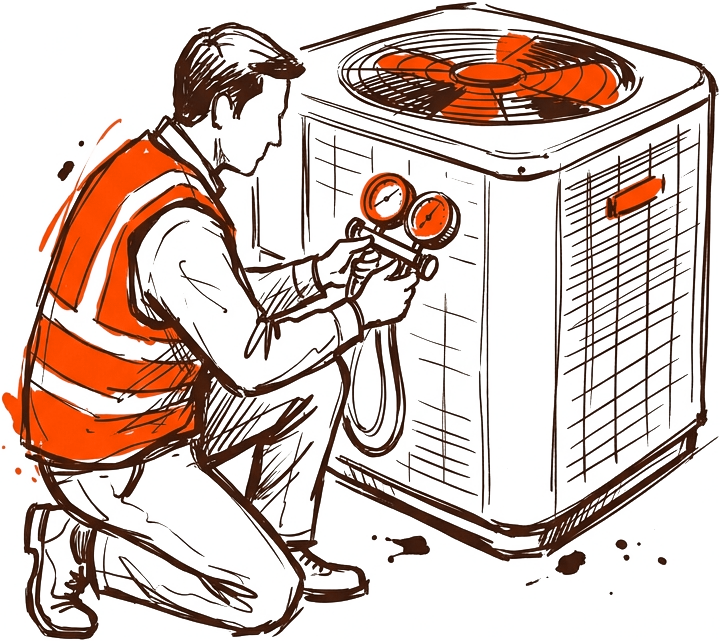
If you can diagnose a failed capacitor in 90 seconds but freeze up when someone says "business plan," you are not alone. Plenty of great HVAC techs start their own shop and learn the business side on the fly. The good news: you do not need an MBA. You need a license, the right insurance, a pricing model that actually makes money, and a simple way to get clients and get paid. This guide walks through the practical steps, from paperwork to your first invoice.
Key takeaways
- Get your licensing and insurance squared away before you book paid work. Requirements vary by state and city.
- Price for profit by covering your true labor cost, overhead, and a markup on parts, not just a gut-feel hourly rate.
- Your first clients come from your existing network, online reviews, and being easy to reach and quick to quote.
- A single tool for quotes, scheduling, invoices, and payments saves hours a week once jobs start flowing.
Nail Down Licensing and Registration
HVAC licensing in the US is handled at the state and sometimes city or county level, so the exact rules depend on where you work. This is general guidance, not legal advice, but the common pieces look similar across the country.
- State HVAC or mechanical contractor license. Many states require you to pass a trade exam and show experience hours before you can pull permits.
- EPA Section 608 certification. Required to buy and handle refrigerants. If you are reading this, you likely already have it.
- Business entity. Most new owners form an LLC for liability separation. Register with your state and get an EIN from the IRS (it is free).
- Local business license and sales tax permit. Your city or county may require registration, and many states want you collecting sales tax on equipment and parts.
Check before you quote
Call your state licensing board and local permit office before taking paid work. Doing a job without the proper license or permit can void your insurance and create expensive problems down the road.
Get Insured and Bonded
Insurance is not optional in this trade. You are working in people's homes, handling refrigerant, and sending crews onto roofs. A single claim can wipe out a young business. Plan for these coverages:
- General liability: covers property damage and injury claims. Many commercial clients and property managers will not hire you without proof of it.
- Workers' compensation: usually required once you have employees, and a smart idea even with one helper.
- Commercial auto: your personal policy will not cover a wrapped work van hauling equipment.
- Surety bond: some licenses and some clients require one. It protects the customer if work is not completed.
Typical general liability for a small HVAC operation often runs a few thousand dollars a year, depending on payroll, revenue, and location. Get quotes from two or three agents who know the trades. Bundling can lower the total.
Price for Profit, Not Just to Win the Job
The fastest way to go out of business is to charge too little because you only counted your own time. Your billable rate has to cover the tech's wage, taxes and insurance on that wage, overhead like your van, fuel, software, and advertising, plus actual profit.
A worked example
Say you pay a tech $30 an hour. Labor burden (payroll taxes, workers' comp, benefits) adds roughly 30 percent, so your true cost is about $39 an hour. Now layer on overhead and profit:
- True labor cost: $39 per billable hour.
- Overhead allocation: add $25 per hour to cover van, insurance, software, phone, and advertising.
- Running total: $64 per hour just to break even.
- Profit margin of 25 percent: $64 divided by 0.75 equals about $85 per billable hour.
- Round to a clean $89 to $99 per hour, or build it into flat-rate pricing per job.
On parts, mark up 30 to 50 percent to cover your time sourcing, picking up, and warrantying them. A $400 condenser fan motor billed at a 40 percent markup is $560 to the customer. That markup is not gouging, it is how you fund the truck that shows up when their system dies in July.
Flat rate beats hourly for trust
Homeowners prefer a clear total over a ticking clock. Flat-rate pricing per job also protects you from eating the cost when a repair takes longer than expected.
Land Your First Clients
You do not need a big marketing budget to book your first jobs. You need to be visible, reachable, and fast to respond. Early work usually comes from a mix of these:
- Your existing network. Tell former coworkers, friends, and past customers you are open for business. Referrals from your old crew are gold.
- Google Business Profile. Set it up, add photos, and ask every happy customer for a review. Local search drives a huge share of HVAC calls.
- Partnerships. Realtors, property managers, plumbers, and electricians all run into HVAC problems. Offer a reliable referral relationship.
- Speed. The contractor who answers the phone and sends a quote the same day usually wins. Slow responders lose the job before they ever see the house.
Early on, resist the urge to say yes to everything. Chasing cheap, far-away, or sketchy jobs burns fuel and morale. Focus on the service area and job types where you make money and get good reviews.
Set Up the Tools to Run the Business
The admin side is where new owners drown: quotes typed in a notes app, invoices forgotten for weeks, a schedule living in your head. The fix is a simple system you actually use. At minimum you want:
- A fast way to build and send professional, branded quotes that customers can approve.
- A schedule and dispatch view so crews know where to be without a dozen texts.
- Invoicing tied to the job, so nothing slips through the cracks.
- Card payments on site or by link, because getting paid the day you finish beats chasing checks.
- A dedicated business phone line so your personal number stays private and calls get tracked.
Juggling five separate apps for these tasks creates gaps where money leaks out. One connected system means a quote becomes a scheduled job, which becomes an invoice, which becomes a payment, without re-typing anything.
Brivium pulls all of it into one app: send branded quotes in minutes, schedule crews, and get paid faster with card payments, so you spend less time on paperwork and more time on jobs.
Start free trialPlan Your First 90 Days
Treat the launch like a tune-up: methodical, in order, no skipped steps. A realistic first-90-days plan looks like this:
- Weeks 1 to 2: form your LLC, get your EIN, confirm licensing, and request insurance quotes.
- Weeks 3 to 4: open a business bank account, set your pricing model, and set up your quote-to-payment tools.
- Weeks 5 to 8: launch your Google Business Profile, tell your network, and book your first jobs.
- Weeks 9 to 12: collect reviews, track which jobs make the most money, and adjust pricing or service area based on what you learn.
Keep a close eye on cash flow in these months. Equipment and parts tie up money fast, so invoice promptly and collect on completion wherever you can.
Frequently asked questions
How much does it cost to start a HVAC business?
It varies widely, but many owners launch for a few thousand to tens of thousands of dollars depending on whether they already own a van and tools. Big line items are insurance, a vehicle, equipment, licensing fees, and initial inventory.
Do I need a license to start a HVAC business?
In most states, yes. HVAC and mechanical contractor licensing is handled at the state and sometimes local level, and you typically need EPA 608 certification to handle refrigerants. Check your state board before taking paid work.
How should I price HVAC jobs as a new business?
Base your rate on true labor cost plus labor burden, overhead, and profit, then add a 30 to 50 percent markup on parts. Flat-rate per-job pricing is often clearer for customers and safer for you than billing by the hour.
How do I get my first HVAC clients?
Start with your existing network and referrals, set up a Google Business Profile and gather reviews, partner with realtors and other trades, and respond fast. Quick quotes and same-day callbacks win more jobs than a big ad budget.