
Window Cleaning
How to Price a Window Cleaning Job
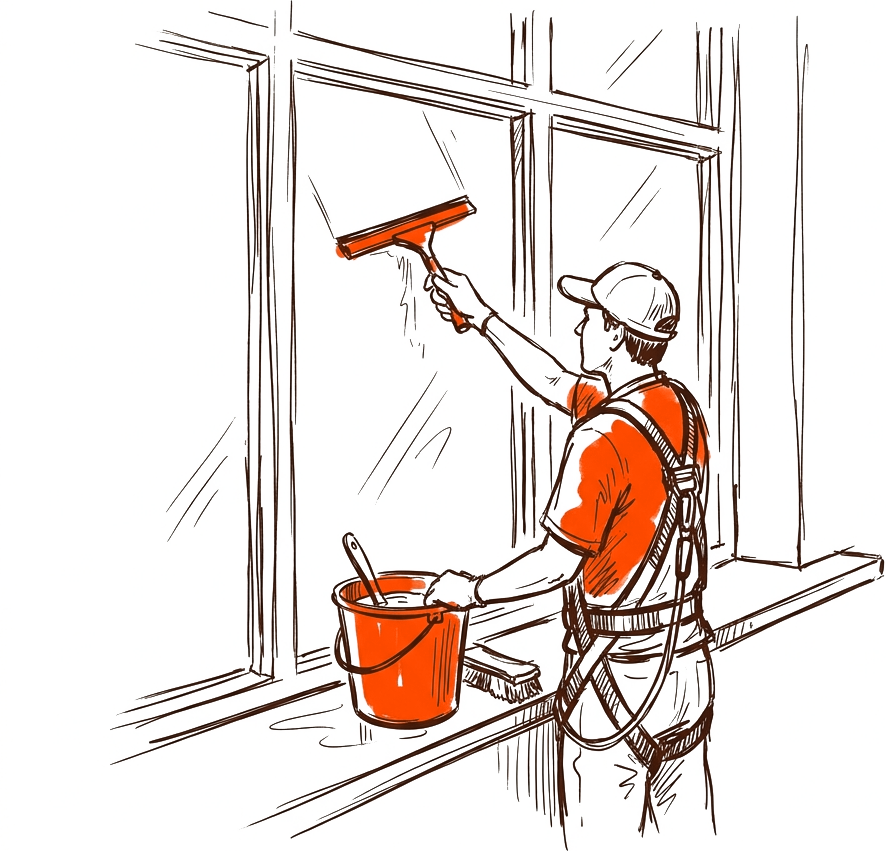
Pricing a window cleaning job wrong is how good crews stay broke. Bid too high and you lose the work. Bid too low and you win jobs that eat your day and leave nothing behind. The goal is a number that covers your real costs, pays your people fairly, and leaves a profit you can actually bank. This guide walks through how to price a window cleaning job the way a working owner does it: labor, materials, overhead, prep and complexity, then margin on top.
Key takeaways
- Price from your costs first, then add margin. Do not guess based on what the last guy charged.
- Labor is your biggest number. Estimate the hours honestly, including drive and setup time.
- Complexity, height, and prep are where most estimators lose money. Charge for them.
- Aim for a healthy net margin, typically 20 to 40 percent, after all costs are covered.
Start With the Two Ways to Price
Most window cleaners use one of two approaches, and the best shops use both to sanity-check each other.
- Per-pane or per-window pricing: You set a rate per pane (for example, $6 to $12 inside and out) and multiply by the count. Fast for residential and easy to explain to homeowners.
- Hourly or day-rate pricing: You estimate the total hours, multiply by your target billable rate, then add materials. Better for commercial, storefronts, and anything unusual.
Per-pane pricing feels simple, but it hides the real driver of cost: time. A first-floor picture window and a third-story window over a stairwell might count the same on paper and take three times as long in the field. Whatever method you quote from, build the number up from your actual costs. That is the part beginners skip.
Step 1: Estimate the Labor Honestly
Labor is almost always your largest cost. Start by estimating how long the job will take a real crew on a real day, not your best-case hero pace.
- Count the windows and note which are interior, exterior, or both.
- Estimate cleaning time per window based on access and size.
- Add setup, ladder moves, and teardown.
- Add drive time to and from the site.
- Multiply total hours by your fully loaded labor cost per hour.
Your fully loaded labor cost is not just the wage. If you pay a tech $20 per hour, your true cost with payroll taxes, workers comp, and other burden is often $26 to $30 per hour. Use the loaded number so you are not quietly losing money on every hour worked.
Field tip
Track your actual times for a few weeks. You will almost always find jobs take 15 to 30 percent longer than you guessed. Bid to reality, not to the stopwatch in your head.
Step 2: Add Materials and Equipment Cost
Materials are a smaller line for window cleaning, but they still count. Include the consumables you burn on the job and a share of the gear that wears out.
- Squeegee rubber, applicators, and microfiber
- Detergent, soap, and pure water resin for water-fed poles
- Scrapers, blades, and towels
- Wear on ladders, poles, hoses, and pumps (a small allocation per job)
For most residential jobs, materials land somewhere in the range of $5 to $25. Water-fed pole and high-rise work can run higher. Do not obsess over pennies here, but do not pretend materials are free either. Fold a realistic number in.
Step 3: Cover Your Overhead
Overhead is the cost of being in business whether or not you clean a single window today: insurance, vehicle payments, fuel, phone, software, marketing, licensing, and your own time running the company. If you forget overhead, your "profit" is really just unpaid bills waiting to arrive.
The simplest method is to calculate your monthly overhead, divide by the billable hours you actually sell in a month, and get an overhead cost per hour. Add that to your labor cost. For a small operation, overhead often adds $10 to $25 per billable hour. Bake it into every quote so it is always covered.
Step 4: Price for Prep and Complexity
This is where estimators leave the most money on the table. Two jobs with the same window count are rarely the same job. Charge for the conditions, not just the glass.
- Height and access: Second and third stories, steep roofs, ladder-heavy work, and tight landscaping all slow you down and raise risk.
- Construction cleanup: Paint, stucco, and adhesive residue can double or triple the time per pane. Price these separately.
- Hard water and mineral stains: Restoration is a different service, not standard cleaning. Charge accordingly.
- Frequency: One-time cleans cost more per visit than recurring monthly or quarterly accounts because there is more buildup and more scheduling overhead.
- Screens and tracks: If they want screens cleaned and tracks detailed, that is added labor. Line-item it.
Protect your margin
When conditions are unknown, quote a range or add a complexity buffer of 10 to 20 percent. It is far easier to come in under a slightly padded estimate than to explain a surprise change order.
Step 5: Add Your Profit Margin, Then Do the Math
Once labor, materials, overhead, and complexity are covered, you have your break-even cost. Profit is what you add on top. A common target for field-service work is a net margin of 20 to 40 percent. Below 15 percent, one slow week or one callback can wipe you out.
Here is a worked example for a two-story residential exterior clean, roughly 30 windows, with one crew member and a helper.
- Labor: 5 hours on site plus 1 hour drive and setup = 6 hours. Two people at a loaded $28 per hour = $336.
- Materials: $15.
- Overhead: 6 billable hours at $15 per hour = $90.
- Complexity buffer: Second-story ladder work, add 15 percent to labor = about $50.
- Break-even total: $336 + $15 + $90 + $50 = $491.
- Profit margin at 30 percent: $491 divided by 0.70 = about $701.
- Quote the customer: round to $700.
Notice how the two-person crew and the second-story buffer changed the picture. If you had quoted this by pane at $10 per window, you would have landed at $300 and lost money on a full afternoon of work.
Common Window Cleaning Pricing Mistakes
- Copying a competitor's per-pane rate without knowing their costs, crew size, or route density.
- Forgetting drive time and setup, which can be 20 to 40 percent of a small residential job.
- Using raw wages instead of loaded labor cost, so payroll burden quietly eats your margin.
- Skipping overhead entirely, then wondering why a busy month left no cash.
- Racing to the lowest bid to win volume, which fills your calendar with jobs that cannot pay you a wage.
- Not requiring a deposit or fast payment, so you finance the customer for weeks.
The fix for all of these is the same: build every quote from your real numbers, keep your estimates and job history in one place, and get paid on the spot when the work is done.
Brivium lets you send clean, branded window cleaning quotes, schedule the crew, and take card payments in the field, so the number you priced is the number that actually hits your account.
Start free trialPrice from cost, charge for complexity, protect your margin, and get paid promptly. Do that on every job and window cleaning turns from a hustle into a business that pays you well.
Frequently asked questions
How much should I charge to clean windows on a house?
Most residential exterior cleans fall between $150 and $400 depending on window count, stories, and access. Build your number from labor, materials, overhead, and margin rather than a flat rate, and adjust for height and prep.
Should I price per window or by the hour?
Per-pane pricing is fast for standard residential work, while hourly or day-rate pricing is better for commercial, restoration, and unusual access. Whichever you quote from, estimate the hours honestly and check that the total covers your true costs plus profit.
What profit margin should a window cleaning business target?
After covering labor, materials, and overhead, aim for a net margin of roughly 20 to 40 percent. Below 15 percent leaves almost no cushion for callbacks, slow weeks, or surprises on site.
Why do my window cleaning jobs take longer than I quote?
Most estimators forget drive time, ladder moves, setup, and teardown, and they underestimate second-story and detail work. Track your actual times for a few weeks and pad complex jobs by 10 to 20 percent.