
Pest Control
How to Price a Pest Control Job
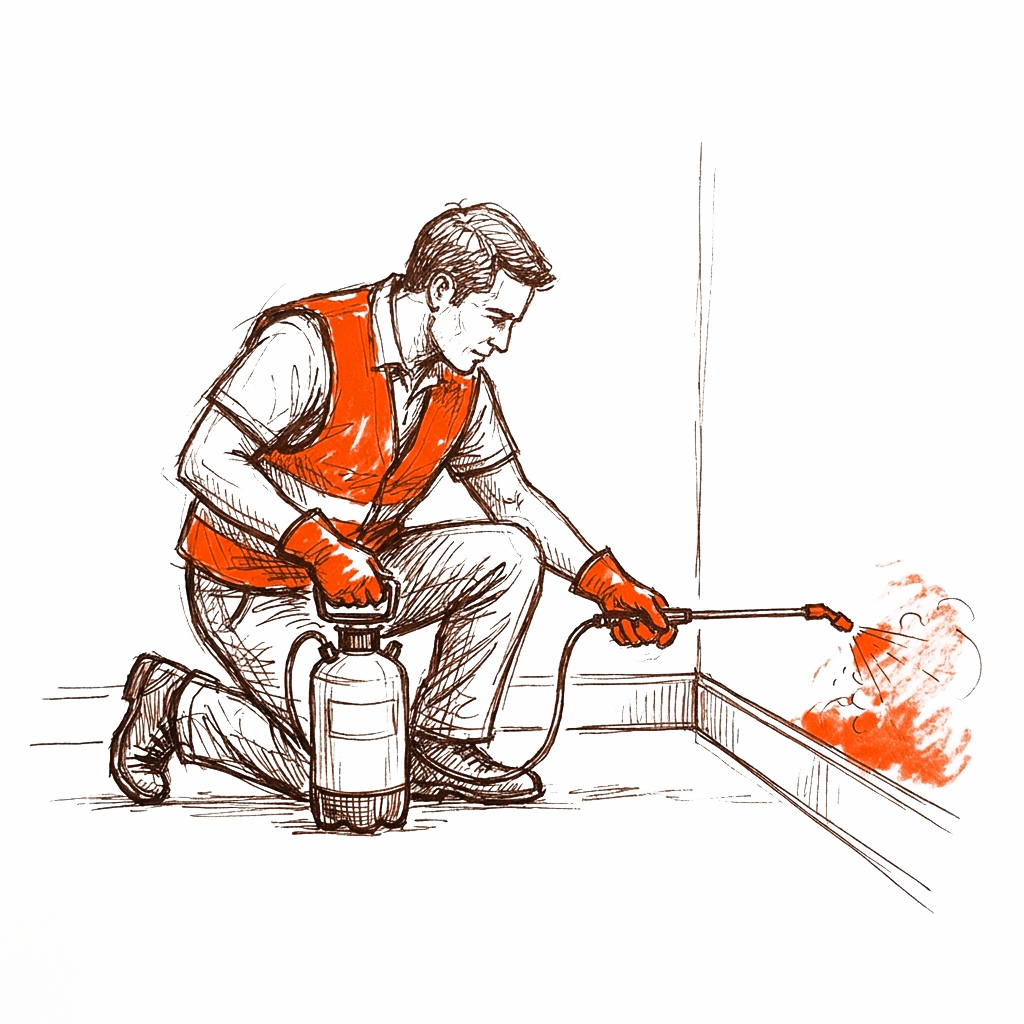
If you have ever quoted a pest control job off the top of your head, then found out later you barely broke even, you are not alone. Pricing is where a lot of good techs leave money on the table. The chemicals are cheap, so it feels like most of the job is profit. It is not. Your truck, your license, your insurance, and your drive time all have to be paid before you keep a dime.
This guide walks through how to price a pest control job the right way: build it up from labor, materials, and overhead, adjust for prep and complexity, then add a real profit margin. We will run the numbers on a sample job so you can copy the math on your next quote.
Key takeaways
- Price from the bottom up: labor, materials, and overhead first, then add margin on top of your true cost.
- Chemical cost is usually a small part of the job. Your time, truck, and overhead are the real costs.
- Adjust for prep, access, square footage, and pest severity so a hard job is not priced like an easy one.
- Aim for a profit margin, not just covering costs. A common target is 20 to 40 percent net on a job.
Start with your true labor cost
Labor is more than what you pay a tech per hour. Your loaded labor cost includes wages, payroll taxes, workers comp, and any benefits. A tech you pay 22 dollars an hour often costs you closer to 28 to 32 dollars an hour once you add those up.
Then count all the time the job eats, not just the spray time. Drive time, setup, inspection, treatment, and cleanup all belong to the job. A treatment that takes 45 minutes on site can easily be 90 minutes of paid time once you count the round trip.
Count windshield time
Drive time is real cost. A job 40 minutes away is very different from one 5 minutes away, even if the treatment is identical. Build travel into your labor number or add a trip charge for far routes.
Add materials and product cost
Materials are your chemicals, baits, granules, dusts, and consumables like gloves and bait stations. For most general pest jobs the product cost is small, often 5 to 15 dollars for a standard exterior treatment. Termite, rodent exclusion, and heavy infestations run much higher because of bait stations, sealing materials, or specialty products.
Track cost per application, not cost per jug. Figure out how many treatments you get from a container, then divide. If a concentrate makes 20 tank mixes and costs 120 dollars, that is 6 dollars per job in product. Small numbers add up across a full route.
Cover your overhead
Overhead is everything you pay whether or not you run a single job today: truck payment and fuel, insurance, license and continuing education, software, phone, marketing, and office costs. If you skip overhead in your pricing, your profit is an illusion.
An easy way to handle it: total your monthly overhead, then divide by the number of jobs you complete in a month. If you spend 4,000 dollars a month in overhead and run 200 jobs, that is 20 dollars of overhead baked into every job.
- Vehicle: payment, fuel, maintenance, insurance
- Business insurance and bonding
- Licensing, certifications, and CE credits
- Phone, software, and payment processing fees
- Marketing, advertising, and lead costs
Adjust for prep, access, and complexity
Two houses can need the same treatment and still deserve different prices. A slab-on-grade ranch with an open yard is fast. A cluttered crawl space, a three-story home, heavy vegetation, or a severe roach infestation is not. Price the reality, not the average.
Build a mental checklist and add time or a flat surcharge for anything that slows you down:
- Square footage and lot size for exterior perimeter work
- Crawl space, attic, or tight access that adds time and risk
- Severity of the infestation and number of follow-ups likely needed
- Pest type: bed bugs, termites, and wildlife need specialized time and product
- Prep required by you versus the customer before treatment
Recurring versus one-time
One-time jobs should be priced higher per visit because you carry all the acquisition cost in one shot. Recurring quarterly plans can be priced lower per visit since the relationship and route efficiency pay you back over time.
Add profit margin, then a worked example
Profit is not what is left over by accident. It is a number you decide on and add on purpose. Once you know your total cost for a job, mark it up so your net margin lands where you want it, commonly 20 to 40 percent for pest control.
Here is the full math on a standard exterior general pest treatment for a mid-size home:
- Labor: 1.5 hours of loaded time at 30 dollars per hour = 45 dollars
- Materials: concentrate, granules, and consumables = 12 dollars
- Overhead: allocated per job = 20 dollars
- Total cost so far = 77 dollars
- Complexity add-on: none for this easy job = 0 dollars
- Add 35 percent margin: 77 divided by 0.65 = about 118 dollars
So this job should be quoted around 118 to 125 dollars, not the 89 dollars you might have guessed. Now imagine the same home had a bad roach problem needing interior work and a two-week follow-up. You add an hour of labor (30 dollars) plus extra product (10 dollars), bringing cost to 117 dollars, then mark up to about 180 dollars. Same house, very different job, very different price.
Divide, do not multiply
To hit a target margin, divide cost by (1 minus margin). For 30 percent margin, divide by 0.70. Multiplying cost by 1.30 only gives you a 23 percent margin, which quietly shorts you every job.
Common pricing mistakes to avoid
Most pricing pain comes from a handful of repeat mistakes. Watch for these:
- Pricing off chemical cost only and forgetting labor, travel, and overhead
- Confusing markup with margin, so your real profit is thinner than you think
- Racing to the bottom to beat a competitor instead of selling your reliability
- Quoting the same flat price for easy and difficult homes
- Not building in follow-ups, warranties, or callbacks that cost you time later
- Forgetting payment processing fees, which quietly eat 2 to 3 percent of every card sale
A clean, itemized quote also helps you win jobs at a fair price. When a homeowner sees what they are paying for, they compare less on price alone and more on trust.
Brivium helps you send branded pest control quotes in minutes, schedule the crew, and get paid on the spot by card, so the price you calculated is the price you actually collect.
Start free trialPut it into a repeatable system
The goal is not to redo this math from scratch every time. Build a simple price list based on your true costs: a base rate for common treatments, add-ons for complexity and pest type, and a set margin. Then adjust for the specific home in front of you. Do this consistently and your pricing stops being a guess and starts being a system that protects your profit on every job.
Frequently asked questions
How much should I charge for a pest control job?
Build the price from your costs: loaded labor, materials, and overhead, then add 20 to 40 percent margin. A standard exterior treatment for a mid-size home often lands around 100 to 150 dollars, but complexity and pest type move that number a lot.
What is a good profit margin for pest control?
A common target is 20 to 40 percent net profit per job. To hit it, divide your total job cost by 1 minus the margin, for example cost divided by 0.70 for a 30 percent margin.
Should recurring plans be cheaper than one-time treatments?
Usually yes per visit. One-time jobs carry all the acquisition cost at once, so they should be priced higher. Recurring quarterly plans can be lower per visit because route efficiency and the ongoing relationship pay you back over time.
Why is my pest control business not profitable even though I stay busy?
Often it is pricing off chemical cost only and ignoring labor, drive time, overhead, and payment fees. Rebuild your prices from true costs, add a real margin, and charge more for difficult homes and severe infestations.