
Garage Doors
How to Price a Garage Door Job
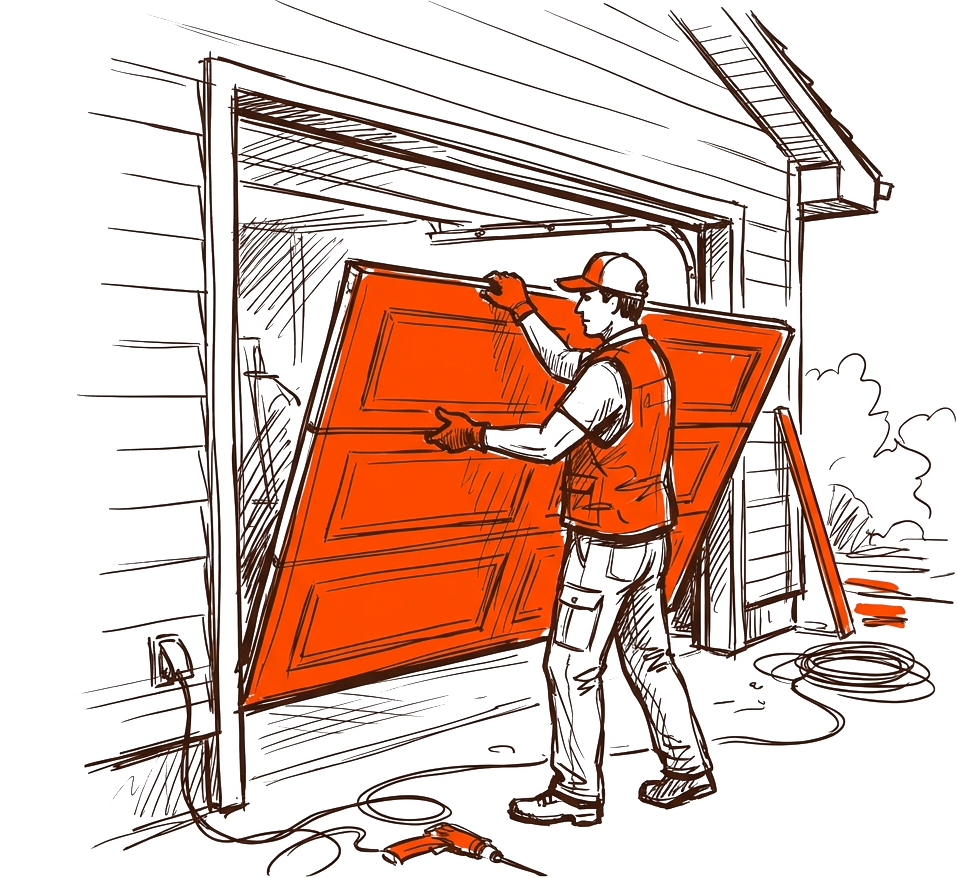
Pricing a garage door job feels simple until you actually run the numbers. You quote a spring replacement off the top of your head, then realize you forgot the trip charge, the second spring, and the fact that your truck payment does not care whether you made money that day. Whether you install full systems or run service calls, a repeatable pricing method keeps you profitable and lets you quote fast without guessing. This guide walks through labor, materials, overhead, complexity, and margin, with a real numeric example you can copy.
Key takeaways
- Price from the bottom up: labor plus materials plus overhead, then add margin on top. Never quote a round number and hope.
- Overhead is a real cost. If you skip it, your profit margin is quietly funding your truck, insurance, and phone bill.
- Job complexity and prep time make two jobs with the same door cost very different. Charge for the hard ones.
- A consistent formula lets you quote faster, win more, and stop leaving money on the table.
Start With Labor: What Your Time Actually Costs
Labor is your foundation, and most owners underprice it because they think about the hourly wage, not the loaded cost. Your loaded labor rate should include the tech's pay, payroll taxes, workers comp, and any benefits. A tech you pay $25 an hour often costs you $33 to $38 an hour once you add those in.
Next, estimate the real job time honestly. Include drive time, setup, the actual work, cleanup, and walking the customer through the finished job. A standard single-door spring swap might be 45 to 60 minutes of on-site work, but a full opener and door install can run 4 to 6 hours with two techs.
Rule of thumb
Track your average job times for a month. Guessing from memory almost always underestimates. The stopwatch does not lie.
Add Materials at Your Real Cost, Not Retail Memory
Materials include the obvious parts like the door, springs, rollers, cables, opener, and hardware, plus the small stuff that adds up: lube, fasteners, weatherstripping, and shims. Price these at what you actually pay today, not what you paid two years ago. Supplier prices move, and stale numbers eat your margin.
Many shops apply a materials markup of 20 to 50 percent to cover procurement time, warranty risk, and the cost of carrying stock. That markup is separate from your profit margin on the whole job. If you sell parts at cost, you are working for free on the ordering and stocking side.
- Major parts: door, opener, motor, springs, drums, cables
- Consumables: lube, fasteners, brackets, weatherstrip
- Warranty buffer: the occasional callback part you eat
Cover Your Overhead Before You Count Profit
Overhead is everything it costs to keep the lights on whether or not you booked a job today: truck payments, fuel, insurance, phone, software, advertising, licensing, and your own admin time. This is the number most crews forget, and it is the reason a busy shop can still end the year broke.
The simplest way to handle overhead is to calculate your monthly overhead, divide it across the number of billable jobs or billable hours you expect that month, and add that amount to every quote. If your monthly overhead is $6,000 and you complete about 100 jobs a month, that is $60 of overhead baked into every single job before you make a dime.
Adjust for Prep, Complexity, and Access
Two jobs with the same door and the same parts can take very different effort. A ground-floor garage with clear access is not the same as a job where you are fighting rusted hardware, a low headroom conversion, high-lift track, or a homeowner who wants everything explained twice. Price for the conditions, not just the part list.
Build a simple complexity adjustment into your process. Add time or a flat surcharge for things that predictably slow you down.
- Rust or seized hardware that needs cutting or drilling out
- Low headroom or high-lift conversions
- Difficult access, tight driveways, or blocked bays
- Old or nonstandard door sizes needing custom parts
- Debris removal or haul-away of the old door
Apply Your Profit Margin on Top
Profit margin is not the same as markup, and mixing them up costs money. Margin is profit as a percentage of the final price. If you want a 20 percent margin, you do not multiply your costs by 1.2. You divide your total cost by 0.80. That difference matters more the bigger the job.
Many field service shops target a net profit margin somewhere in the 15 to 30 percent range after overhead. Where you land depends on your market, your reputation, and how much competition you face. Do not race to the bottom. The cheapest bidder in town is usually the one working the most hours for the least money.
A Worked Example: Spring Replacement Plus New Opener
Let's price a common job: replace both torsion springs and install a new opener on a standard two-car door with normal access.
- Labor: 2.5 hours of on-site and drive time at a loaded rate of $36 per hour equals $90.
- Materials: two springs at $40, opener at $180, hardware and consumables at $30 equals $250 at cost. Apply a 30 percent materials markup: $250 times 1.30 equals $325.
- Overhead: add your per-job overhead of $60.
- Subtotal cost basis: $90 labor plus $325 materials plus $60 overhead equals $475.
- Complexity: standard access, no adjustment this time.
- Apply a 20 percent margin: $475 divided by 0.80 equals $593.75. Round to $595.
That $595 quote covers your tech, your parts and markup, your overhead, and leaves roughly $120 of real profit. Quote this same job at a gut-feel $450 and you have wiped out most of your profit and part of your overhead. Same work, very different year-end result.
Common Pricing Mistakes to Avoid
- Quoting round numbers from memory instead of building the price up from cost.
- Forgetting overhead, then wondering where the money went.
- Using old material costs after supplier prices climbed.
- Charging the same for a clean job and a rusted, low-headroom nightmare.
- Confusing markup with margin and shorting yourself on big jobs.
- Discounting to win a price shopper who will never be loyal anyway.
Brivium lets you build these numbers into branded quotes in minutes, schedule the crew, and get paid on the spot with card payments, so your pricing formula actually makes it from the truck to your bank account.
Start free trialConsistency is the whole game. Once you have a formula for labor, materials, overhead, complexity, and margin, you can quote confidently, respond faster than the competition, and protect the profit you worked for. Build it once, use it on every job, and adjust as your costs change.
Frequently asked questions
How much should I charge for a garage door spring replacement?
Most shops land somewhere in the $200 to $400 range for a standard spring job, but the right price comes from your own numbers: loaded labor, parts at real cost with markup, per-job overhead, and your target margin.
What is the difference between markup and margin?
Markup is a percentage added to your cost. Margin is profit as a percentage of the final price. For a 20 percent margin, divide your total cost by 0.80 rather than multiplying by 1.20.
How do I calculate overhead for each garage door job?
Add up your monthly fixed costs like truck, insurance, phone, and software, then divide by the number of jobs or billable hours you expect that month. Add that per-job amount to every quote.
Should I charge a trip or service call fee?
Yes. Drive time and fuel are real costs. Either build a flat trip charge into your pricing or fold that time into your labor estimate so you never absorb it for free.