
Garage Doors
How Garage Door Contractors Get Paid Faster
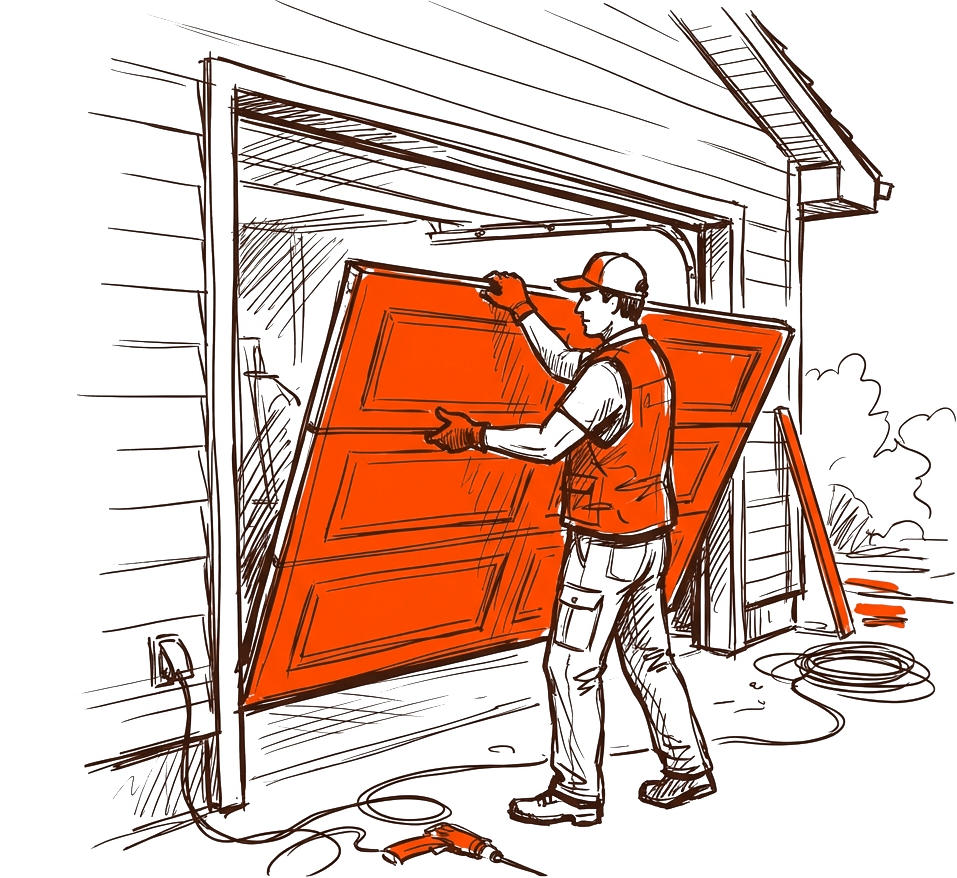
You already did the hard part: you drove out, diagnosed the busted torsion spring, swapped the opener, and left the customer happy. So why is the money still sitting out there two weeks later? For a lot of garage door crews, the slow part of the job is not the work, it is the paperwork and the waiting. This post walks through the practical levers that actually move cash into your account faster, without turning you into a collections agency.
Key takeaways
- Collect a deposit before you order parts or roll a truck, especially on custom doors.
- Invoice on-site the moment the job is done, while the customer is standing there.
- Take card and digital payments so there is no 'the check is in the mail' delay.
- Set up a simple, automatic follow-up rhythm for anything that goes overdue.
Take a deposit before the truck rolls
On small service calls, a spring or a couple of rollers, you can usually collect in full at the end. But on installs and custom doors, you are fronting real money on materials and hardware. A deposit protects your cash flow and filters out the tire-kickers who were never going to buy.
A typical deposit for a full door install runs somewhere in the 25 to 50 percent range depending on how custom the order is. The rule of thumb: your deposit should at least cover what you spend on materials before install day, so you are never out of pocket on someone else's project.
Quick math
Say a full install quote is $2,400 and your door plus hardware costs $1,100. A 50 percent deposit of $1,200 covers your materials before you ever order them. You install with the parts already paid for, then collect the remaining $1,200 the day the job wraps.
Put the deposit terms right on the quote so there are no surprises. When the customer approves the quote, they are agreeing to the deposit at the same time.
Use milestone billing on bigger jobs
Anything that spans more than a day or involves multiple doors is a good candidate for milestone billing. Instead of one big invoice at the end, you break the job into stages and bill as you hit each one. This keeps money flowing to you instead of you financing the whole project on your own dime.
A simple three-stage structure works for most multi-door commercial or high-end residential jobs:
- Deposit at approval to cover materials and lock the schedule.
- Progress payment when doors and openers arrive or when the first phase is installed.
- Final balance on completion and walkthrough.
For a $9,000 four-door commercial job, that might look like $3,000 up front, $3,000 at delivery, and $3,000 at completion. You are never carrying more than a third of the job, and the customer sees exactly what they are paying for at each step.
Invoice on-site, not from the office
This is the single biggest speed-up for most crews, and it costs nothing. The gap between finishing a job and sending the invoice is where cash goes to die. If your tech waits until they are back at the shop, or worse, until the owner does invoices on Sunday night, you have already added days for no reason.
Build the invoice on your phone or tablet the moment you tighten the last bolt. The customer is right there, the work is fresh, and they are in a paying mood because they can see the finished door. Hand them the total, walk through it, and ask for payment before you pull out of the driveway.
Contractor tip
Turn your approved quote into the invoice with one tap instead of retyping everything. Same line items, same totals, no double entry, no math errors that spark a dispute later.
Take cards and digital payments in the field
Every time you tell a customer 'just mail me a check,' you are adding a week or more and hoping nothing gets lost. Checks also give people a reason to procrastinate. Card and digital payments close that gap because the customer can pay you before you leave.
Yes, card processing has a fee, usually in the low single-digit percent range. Do the honest math. If taking a card gets you $2,400 today instead of a check that shows up in 12 days after two reminder calls, that fee is cheap. Getting paid now beats getting paid eventually almost every time.
- Tap or swipe on the spot for jobs you complete same-day.
- Text or email a payment link for customers who want to pay after they talk to a spouse.
- Save the card on file with permission for repeat commercial accounts and maintenance plans.
Offering more than one way to pay removes the excuse. Some folks want a card, some want to pay online later that night, some still want a check. Let them pay however is fastest for them, because fastest for them is usually fastest for you.
Build a follow-up rhythm for overdue invoices
Even with deposits and on-site invoicing, some balances will slip past due. The mistake is treating each one as a personal chase. You need a system that runs on a schedule so nothing falls through the cracks and you are not the bad guy.
A calm, consistent cadence collects more than sporadic angry phone calls. Here is a reliable one:
- Day 1 after the due date: friendly reminder by text and email with the payment link included.
- Day 7: a short follow-up noting the balance is now a week past due.
- Day 14: a direct message or phone call to confirm they received the invoice and sort out any issue.
- Day 21 and beyond: escalate per your terms, whether that is a late fee or a hold on future work.
Notice that every reminder includes the way to pay. Do not make someone go digging for the invoice. If the link is right there, a good chunk of overdue balances clear themselves the moment the reminder lands.
Set expectations up front
Put your payment terms and any late fee on the quote and the invoice. When it is written down from the start, following up later is just enforcing what they already agreed to, not a fight.
Put it all together
None of these moves are complicated. The reason they get skipped is that doing them by hand across paper quotes, a separate card reader, and a shoebox of receipts is a pain. When your quote, invoice, payment, and follow-up all live in one place, getting paid faster stops being a special effort and just becomes how you run jobs.
Start with the two that move the needle most: collect a deposit before you order parts, and invoice on-site with a way to pay right there. Add milestone billing on your bigger jobs and an automatic overdue follow-up, and you will feel the difference in your bank account within a month.
Brivium keeps your branded quotes, on-site invoices, card payments, and scheduling in one app, so your garage door crew can get paid before they leave the driveway.
Start free trialThe work is already done well. Make sure the getting-paid part keeps up with the craftsmanship.
Frequently asked questions
How much deposit should a garage door contractor take?
For custom doors and full installs, a typical deposit runs 25 to 50 percent. Aim to at least cover your material and hardware cost so you are never out of pocket before install day.
Is it worth taking card payments given the processing fees?
Usually yes. Card fees are typically low single-digit percent, and getting paid on-site instead of waiting on a mailed check that needs reminders almost always beats that small cost.
When should I use milestone billing?
Use it on multi-day or multi-door jobs. A common split is a deposit at approval, a progress payment at delivery or first phase, and the balance at completion, so you never finance the whole project alone.
What is the best way to handle overdue invoices?
Run a set schedule: a friendly reminder at day 1, a follow-up at day 7, a call at day 14, and escalation after that. Include the payment link in every reminder so customers can pay instantly.