
Flooring
Flooring Quoting Mistakes That Cost You Money
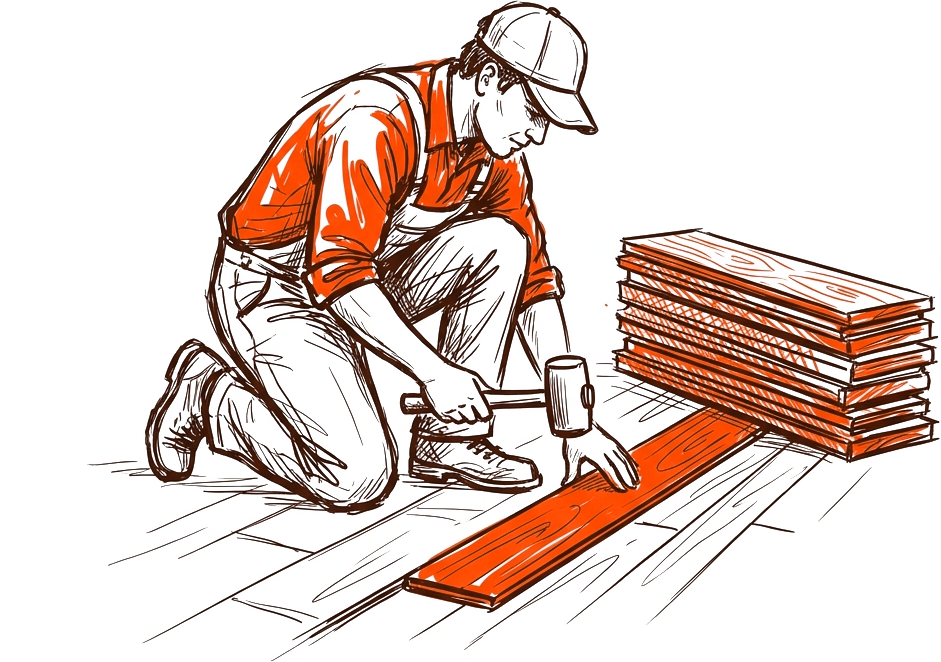
If you install floors for a living, you already know the job is won or lost before you ever pick up a trowel. The quote sets your margin, your schedule, and whether you get paid on time. Most flooring pros do not lose money on the install. They lose it in the estimate. Here are the most common flooring quoting mistakes we see, and how to fix each one without turning your business into a spreadsheet nightmare.
Key takeaways
- Forgetting prep work (subfloor repair, demo, leveling, haul-away) is the single biggest quoting leak.
- Slow quotes lose jobs: aim to send within 24 to 48 hours while you are still the pro they remember.
- Underpricing overhead turns busy months into broke months. Bake it into every square foot.
- No deposit means you are financing the customer's floor. Collect money up front.
Mistake 1: Forgetting Prep and Subfloor Work
You measured the room, you priced the material, you added labor to lay it. Then you show up and the subfloor is cupped, the old vinyl has to come out, and there is a dip that needs a 40 pound bag of self-leveler. None of that was in the quote, so now you are eating it or having an awkward change-order conversation on day one.
Prep is where margin goes to die because it is invisible until you pull up the old floor. The fix is a prep checklist you walk through on every measure, not a mental note you make and forget.
- Demo and disposal of existing flooring
- Subfloor inspection: soft spots, squeaks, moisture
- Floor leveling and patching compound
- Moisture barrier or underlayment
- Furniture moving and appliance disconnect
- Transition strips, trim, and quarter round
- Haul-away and dump fees
Build in a prep allowance
When you cannot see the full subfloor, note it clearly and quote a leveling allowance with a per-bag rate. That way an extra dip becomes a documented line item, not a loss.
Mistake 2: Underpricing Your Overhead
A lot of flooring quotes only cover material and the labor hours on site. That ignores the truck, fuel, insurance, tool wear, your phone, software, the time you spend measuring and quoting, and the hours nobody pays you for. If overhead is not inside your price, you are busy all year and still wondering where the money went.
Here is a simple way to think about it. Add up your monthly overhead, then divide by the billable hours you actually sell in a month. That gives you a per-hour overhead number to add on top of your labor cost.
Worked example
- Monthly overhead (truck, insurance, phone, software, admin): $6,000
- Billable crew hours sold per month: 320
- Overhead per billable hour: $6,000 / 320 = $18.75
- If your loaded labor cost is $35/hour, your true cost is about $53.75/hour before profit.
- On a job with 24 labor hours, that is $450 of overhead you would have missed by quoting labor alone.
That $450 is the difference between a job that pays and a job that just keeps you moving. Price it in on every square foot and you stop guessing.
Mistake 3: Quoting Too Slow
Flooring is competitive and homeowners are impatient. If you measure on Monday and send the quote the following week, two things happened: your competitor already bid it, and the customer forgot how much they liked you. Speed is a sales advantage that costs you nothing but a system.
The pros who close the most are usually not the cheapest. They are the ones who respond first and look the most professional. A quote that lands within 24 to 48 hours, with clean line items and a branded look, wins jobs that a lower price on a handwritten sheet never will.
- Use saved line items and price templates so you are not rebuilding every quote from scratch.
- Quote from the truck or the kitchen table instead of waiting until you are back at the office.
- Send a clean, branded PDF the customer can approve the same day.
Mistake 4: No Deposit Up Front
If you order the material, schedule the crew, and start demo before you collect a dime, you are financing the customer's floor out of your own pocket. One slow-paying job can choke your cash flow for a month. A deposit protects you and filters out the tire-kickers at the same time.
A typical structure in flooring is a deposit at signing to cover material, a progress payment or the balance at completion. The exact percentage depends on your material cost ratio, but the principle holds: never let the labor get ahead of the money.
A simple deposit rule
Collect enough up front to cover your material cost plus a buffer. If material is 40 percent of the job, a 40 to 50 percent deposit means you are never buying floors with your own cash.
Mistake 5: Vague Quotes and No Scope
A one-line quote that just says 'Install LVP, $4,200' is an invitation for disputes. The customer assumes it includes moving the fridge, hauling the old carpet, and new baseboards. You assumed none of that. Vague quotes cost you in free work and in arguments that sour the referral.
Spell out what is included and, just as important, what is not. Note the product, square footage, waste factor, prep scope, and exclusions. A clear scope is the cheapest insurance you will ever buy.
- Exact product, color, and square footage with waste factor
- What prep is and is not included
- Furniture and appliance handling
- Trim, transitions, and baseboard details
- Payment schedule and deposit terms
Mistake 6: Skipping the Waste Factor and Measuring Loose
Flooring always needs more material than the raw room measurement. Planks break, patterns need matching, diagonals and herringbone eat material fast. If you quote the exact square footage and order the exact square footage, you run short, you reorder, and you pay for a second delivery and a lost day.
Add a waste factor to every quote: a typical range is 5 to 10 percent for straight lays and more for diagonal or complex patterns. Measure twice, price the real number, and make sure the customer is paying for the waste instead of you.
Brivium pulls these fixes together in one place: build branded flooring quotes in minutes, collect a deposit by card the moment the customer approves, and push the won job straight to your schedule so nothing falls through the cracks.
Start free trialFixing Your Quoting Starts With One System
None of these mistakes are about effort. Flooring pros work hard. They happen because quoting lives in your head, on scraps of paper, and in a text thread. When you standardize your prep checklist, bake in overhead, respond fast, and collect a deposit every time, the money stops leaking. Pick one mistake from this list and fix it on your next three quotes. You will feel the difference in the bank, not just on paper.
Honest quoting is not about charging more. It is about charging what the job actually costs, every time, so the good jobs pay for the slow weeks and you are still in business next year.
Frequently asked questions
How fast should I send a flooring quote?
Aim for 24 to 48 hours after the measure. You are still the pro the customer remembers, and fast, professional quotes consistently beat slower competitors even at a slightly higher price.
What waste factor should I use for flooring?
A typical range is 5 to 10 percent for straight lays, and higher for diagonal, herringbone, or complex patterns. Always price the waste into the quote so the customer pays for it, not you.
How much deposit should I collect on a flooring job?
Collect enough to cover your material cost plus a buffer. If material is around 40 percent of the job, a 40 to 50 percent deposit keeps you from buying floors with your own cash.
Why do flooring quotes lose money even when the install goes fine?
Usually because prep work and overhead were left out. Subfloor repair, leveling, haul-away, and your true per-hour overhead are easy to miss, and they quietly erase your margin.