
Fencing
Fencing Quoting Mistakes That Cost You Money
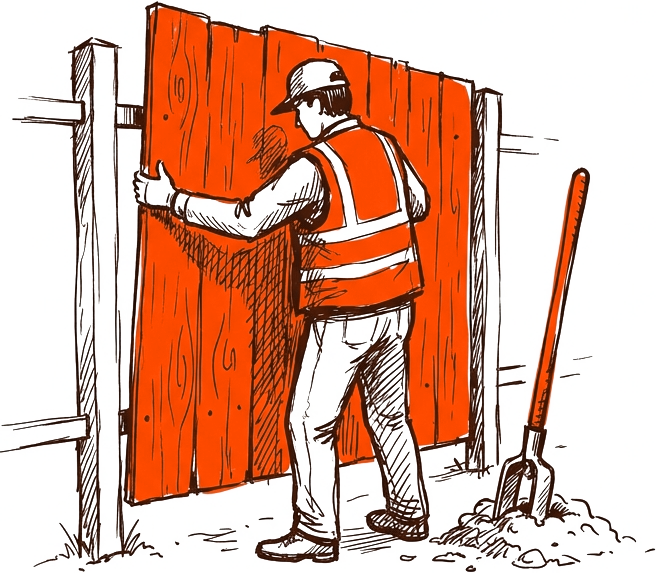
You can be the best fence crew in the county and still go broke on paper. Most of the money leaks in fencing do not happen on the job site, they happen at the quote. A missed line item here, an underpriced overhead there, a quote that goes out three days late, and suddenly a job you thought would net 30 percent barely breaks even. Below are the most common fencing quoting mistakes we see, along with practical fixes you can put to work this week.
Key takeaways
- Forgetting prep work like tear-out, hauling, and hard digs is the fastest way to bleed margin.
- Your quote has to cover overhead, not just materials and labor, or you are paying to work.
- Slow quotes lose jobs. Speed often beats price for the homeowner sitting on three bids.
- No deposit means you are financing the customer's fence with your own cash.
Mistake 1: Forgetting the prep work
The fence itself is the easy part to price. It is the stuff around it that gets forgotten. Old fence tear-out and disposal, root-filled post holes, rocky or clay soil, slope grading, gate hardware, permit runs, locate delays, and hauling debris to the dump. None of that shows up on the material takeoff, but all of it eats hours.
When you walk a job, you are looking at labor, not just linear feet. A 150 foot privacy fence replacing an old chain link with concrete-set posts is a completely different job than a clean install in soft dirt, even though the finished product looks similar on paper.
Build a prep checklist
Keep a standard list of prep items you scan every single quote: tear-out, disposal, soil conditions, slope, gates, permits, utility locates, and access. If you never skip the checklist, you never forget the line item.
Mistake 2: Underpricing your overhead
This is the quiet killer. A lot of fencing pros price a job as materials plus labor plus a little markup, and call it profit. But that markup has to cover your truck payments, fuel, insurance, tools, phone, software, office time, and the days you cannot work because it is raining. If your markup only covers the owner's take, you are not actually making a profit, you are just paying yourself a wage while the business runs at zero.
The fix is to know your overhead rate and bake it into every quote. Add up your monthly fixed costs, divide by the billable hours you actually sell in a month, and you get an overhead cost per hour that has to be recovered before you make a dime of real profit.
A worked example
Say your monthly overhead runs about 8,000 dollars: insurance, truck, fuel, tools, phone, software, and part-time office help. In a typical month your crew sells around 320 billable hours. That is 25 dollars per hour of overhead you must cover on top of wages.
Now price a 3-day job with 2 crew at 8 hours a day, so 48 labor hours. Materials cost 3,200 dollars. Crew wages cost 1,440 dollars. Overhead to recover is 48 times 25, which is 1,200 dollars. Your true cost is 3,200 plus 1,440 plus 1,200, or 5,840 dollars. If you want a 20 percent net profit, you do not add 20 percent, you divide by 0.8. That puts the quote at 7,300 dollars.
The pro who priced at materials plus labor plus a flat 20 percent would have quoted around 5,568 dollars and lost money on a job that felt profitable. That gap, roughly 1,700 dollars, is the cost of ignoring overhead.
Mistake 3: Quoting too slow
Homeowners collect bids fast and lose patience faster. If you measure on Monday and the quote lands the following weekend, two other companies already got there first. Speed reads as professionalism. The first honest, clear quote often wins even when it is not the cheapest, because the customer is tired of waiting and you look like the pro who has their act together.
The problem is usually the process, not the willingness. You are on jobs all day, then the quote sits until you have a quiet evening. The fix is to shorten the path from site visit to sent quote.
- Take measurements and photos on your phone at the walk.
- Use saved price templates for common fence types so you are filling in numbers, not building from scratch.
- Send the quote from the truck or the same evening, not days later.
- Follow up once within 48 hours if you have not heard back.
Mistake 4: No deposit, no payment terms
If you buy the materials, book the crew, and start digging before any money changes hands, you are financing the customer's fence with your own working capital. One slow-paying customer or one cancellation after material delivery can wipe out the profit from two other jobs.
A typical, fair structure is a deposit up front to cover materials, sometimes with a progress payment on longer jobs, and the balance due on completion. Spell it out on the quote so there are no surprises. When the terms are written down and the customer agrees before work starts, collecting is not awkward, it is just the plan.
Make paying easy
Deposits get paid faster when the customer can tap a card instead of writing a check or mailing one. The easier you make payment, the sooner the money lands in your account.
Mistake 5: Vague quotes that invite disputes
A one-line quote that just says fence, 6,000 dollars leaves the door wide open for scope creep and arguments. The customer assumed the old fence removal was included. They thought the quote covered three gates, not one. They expected you to haul away the pile. Every one of those assumptions costs you time and goodwill.
A clear quote lists exactly what is included: fence type and height, linear footage, number and size of gates, post-set method, tear-out and disposal if included, and anything the customer is responsible for. Just as important, note what is not included. A short exclusions section prevents most disputes before they start.
Mistake 6: Not tracking which quotes actually win
If you do not know your close rate, you cannot tell whether your prices are too high, too low, or just fine. A crew closing 8 out of 10 quotes is almost certainly leaving money on the table and should raise prices. A crew closing 2 out of 10 might be too high, too slow, or not following up. You only learn this by tracking quotes sent versus jobs won.
Watch for patterns. If you lose the big jobs but win the small ones, your overhead math on larger projects might be off. If you lose fast, it is often speed or follow-up, not price.
Brivium helps fencing pros send branded quotes from the truck, take card deposits so jobs are funded before you dig, and drop won jobs straight onto the schedule, so fewer mistakes slip through between the estimate and the deposit.
Start free trialPutting it together
Most fencing quoting mistakes are not one big error, they are small leaks that add up over a season. Run a prep checklist, bake overhead into your pricing, send quotes fast, take a deposit, write clear scope, and track your close rate. Fix those six things and you keep more of the money you already earn on every job you install.
- Prep checklist so you never forget tear-out, soil, or gates.
- Overhead per hour built into every price.
- Same-day quotes with saved templates.
- Deposit up front and written payment terms.
- Clear inclusions and exclusions.
- A running tally of quotes sent versus won.
Frequently asked questions
How much deposit should a fencing company collect?
A common approach is a deposit large enough to cover materials up front, with the balance due on completion. On longer jobs, add a progress payment. Write the terms on the quote so the customer agrees before work starts.
How do I figure out my overhead rate for fence quotes?
Add up your monthly fixed costs like insurance, truck, fuel, tools, and software, then divide by the billable hours you actually sell in a month. That gives you an overhead cost per hour to recover on every job before profit.
Why am I losing fence bids even when my price is fair?
Speed and clarity often matter more than price. A slow or vague quote loses to a competitor who responds same day with a clear, itemized bid. Shorten your quoting process and follow up within 48 hours.
What should a fencing quote include to avoid disputes?
List fence type and height, linear footage, gate count and size, post-set method, whether tear-out and disposal are included, payment terms, and a short list of exclusions so expectations are clear up front.