
Electrical
Electrical Quoting Mistakes That Cost You Money
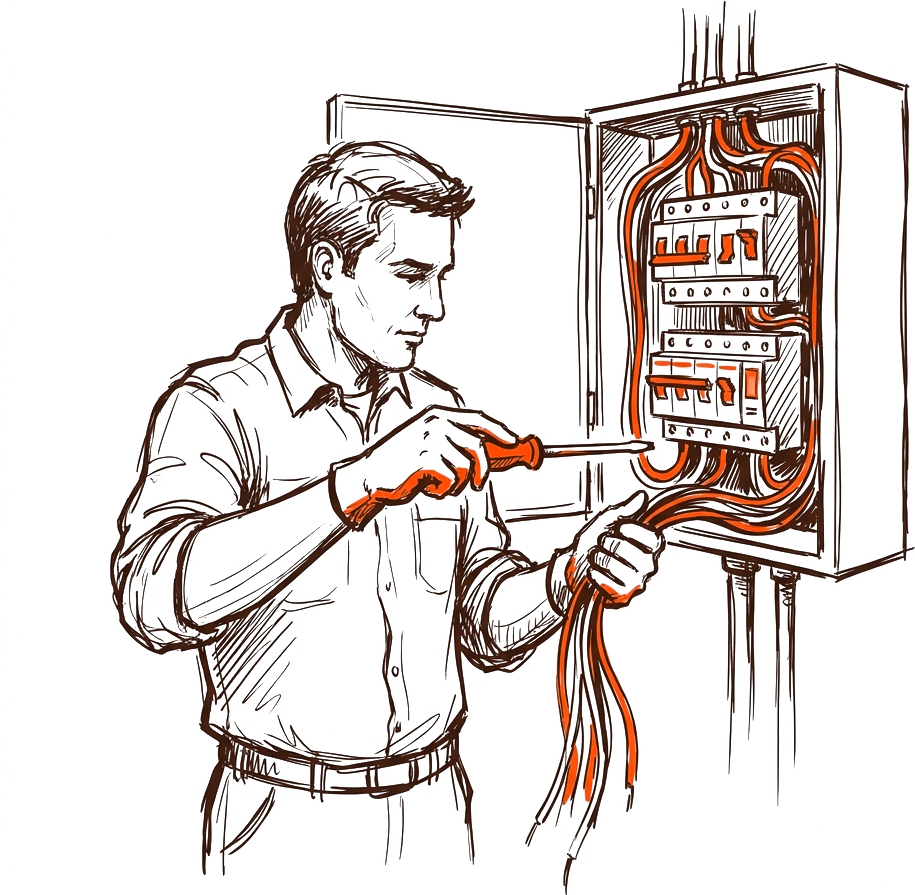
Every electrician has lost money on a job that looked fine on paper. The panel upgrade that ran two days long. The quote that sat in your truck for a week while a competitor swooped in. The invoice you are still chasing 45 days later. Most of these losses do not come from doing the work poorly. They come from how the job was quoted in the first place. Here are the electrical quoting mistakes we see most often, and exactly how to fix each one so your margin survives contact with the real world.
Key takeaways
- Forgotten prep, travel, and cleanup are the silent profit killers in most electrical quotes.
- Underpricing overhead makes a busy shop feel broke. Load your true costs into every hour.
- Speed wins jobs. A quote delivered same day beats a lower price delivered next week.
- No deposit means you are financing the customer. Collect money up front on anything with material.
Mistake 1: Forgetting prep, travel, and cleanup
When you walk a job, your brain prices the obvious parts: the devices, the wire, the labor to make it work. What gets skipped is everything around the work. Driving to the supply house. Pulling and staging material. Protecting floors and furniture. Troubleshooting the thing you could not see from the ground. Cleanup and haul-off. Those hours are real, and if they are not in the quote, they come straight out of your profit.
The fix is a prep-and-wrap line on every quote. Add time for mobilization, material handling, and site protection at the front, and cleanup plus disposal at the end. On a typical residential service call that might be 45 to 90 minutes of labor you were giving away.
Build a standard add-on list
Keep a short checklist of items you always forget: permits, parking, attic or crawlspace access, old fixture disposal, patching. Review it before you send any quote.
Mistake 2: Underpricing your overhead
This is the one that makes a fully booked shop feel broke. If you price labor at your field rate without loading overhead into it, you are not actually making what you think. Your truck, insurance, phone, software, fuel, tools, licensing, and your own unbilled office hours all have to be paid from somewhere. That somewhere is every billable hour.
Here is a simple worked example. Say you pay a journeyman 35 dollars an hour.
- Base wage: 35 dollars per hour
- Labor burden (payroll taxes, workers comp, benefits), roughly 25 to 35 percent: about 10 dollars
- Your true cost on that worker: around 45 dollars per hour
Now layer overhead. If your monthly overhead is 8,000 dollars and you bill roughly 320 productive hours a month across the crew, that is 25 dollars per hour you need to recover just to keep the lights on. Add it up: 45 plus 25 equals 70 dollars per hour before any profit. If you want a 20 percent margin, you need to charge around 88 dollars per hour for that same worker. If you have been quoting 65, you were losing money every hour and did not know it.
Know your break-even number
Calculate your true cost per labor hour once, write it down, and never quote below it. Profit is the number on top of break-even, not the whole thing.
Mistake 3: Quoting too slow
In field service, speed often beats price. When a customer calls three electricians and one sends a clean quote that afternoon, that person usually wins before the other two even reply. Homeowners and property managers read a fast quote as a sign you are organized and reliable. A quote that shows up five days later reads as: this guy might not show up either.
The slowdown is almost always the same thing. You do the walkthrough, then the pricing happens at your kitchen table at 9 pm, if you are not too tired. The fix is to price on site or same day using templates. Build reusable line items for your common jobs: panel swaps, EV chargers, recessed lighting, service upgrades, generator transfer switches. Then a new quote is editing numbers, not writing from scratch.
- Create a template for each of your 8 to 10 most common jobs.
- Price the walkthrough on your phone before you leave the driveway.
- Send the quote the same day while you are still fresh on the details.
- Follow up once within 48 hours if you have not heard back.
Mistake 4: Taking no deposit
If you buy material and start a job with zero money down, you are financing the customer with your own cash. On a job with a few thousand dollars of panel, wire, and gear, that is real exposure if the customer stalls or disappears. A deposit protects your cash flow and filters out the people who were never serious.
A common structure is a deposit that covers your material cost plus a bit, then progress or completion payments after that. For a 6,000 dollar job with 2,200 dollars of material, a deposit of 2,500 to 3,000 dollars is reasonable. You are not out of pocket on parts, and the customer has skin in the game. State your deposit terms clearly on the quote so there are no surprises.
Make paying easy
The faster a customer can pay, the faster you get paid. A card payment link or tap-to-pay on site removes the check in the mail excuse entirely.
Mistake 5: Vague scope and no change-order process
A one-line quote that says rewire kitchen is a dispute waiting to happen. When the customer expects recessed lights and under-cabinet runs that you did not price, you either eat the cost or have an uncomfortable conversation. Spell out exactly what is included and, just as important, what is not. Note the assumptions: existing wiring is accessible, no asbestos or knob-and-tube, drywall repair by others.
Then set a change-order rule before work starts. Anything outside the written scope gets quoted and approved in writing before you do it. This is not about being rigid. It is about getting paid for the extra work you are already doing. Most scope creep on electrical jobs is small additions that never get billed because no one tracked them.
Mistake 6: Guessing instead of tracking your numbers
The last mistake ties the others together. If you do not know what your jobs actually cost versus what you quoted, you repeat the same errors forever. Track estimated hours against actual hours on a handful of jobs. You will quickly see which job types you consistently underbid. Maybe service upgrades always run two hours long, or troubleshooting calls eat more drive time than you think. Once you see the pattern, you adjust the template and the mistake stops costing you.
Brivium keeps this in one place: send branded quotes in minutes with your saved line items, collect deposits and card payments on the spot, and schedule the crew the moment a quote is approved so nothing slips.
Start free trialPutting it together
None of these fixes are complicated. Load your real costs into your hourly rate, add the prep and cleanup you keep forgetting, send quotes fast, collect a deposit, write a clear scope, and track what jobs actually cost. Do those six things and you will stop quoting jobs that look profitable and turn out not to be. The work was never the problem. The math around it was.
Frequently asked questions
How fast should I send an electrical quote?
Same day whenever possible. In field service, a fast, clean quote often beats a lower price delivered days later, because it signals you are organized and reliable.
How much deposit should I ask for on an electrical job?
A good rule is enough to cover your material cost plus a small margin. On jobs with significant gear, a deposit of 30 to 50 percent is common and protects your cash flow.
How do I figure out my real hourly rate?
Start with the worker's wage, add labor burden of roughly 25 to 35 percent, then add overhead per billable hour. Charge above that break-even number to build in profit.
What should always be included in an electrical quote?
Scope and exclusions, prep and cleanup labor, material, permits if needed, deposit terms, and a change-order note so any added work gets approved and billed in writing.