
Concrete
Concrete Quoting Mistakes That Cost You Money
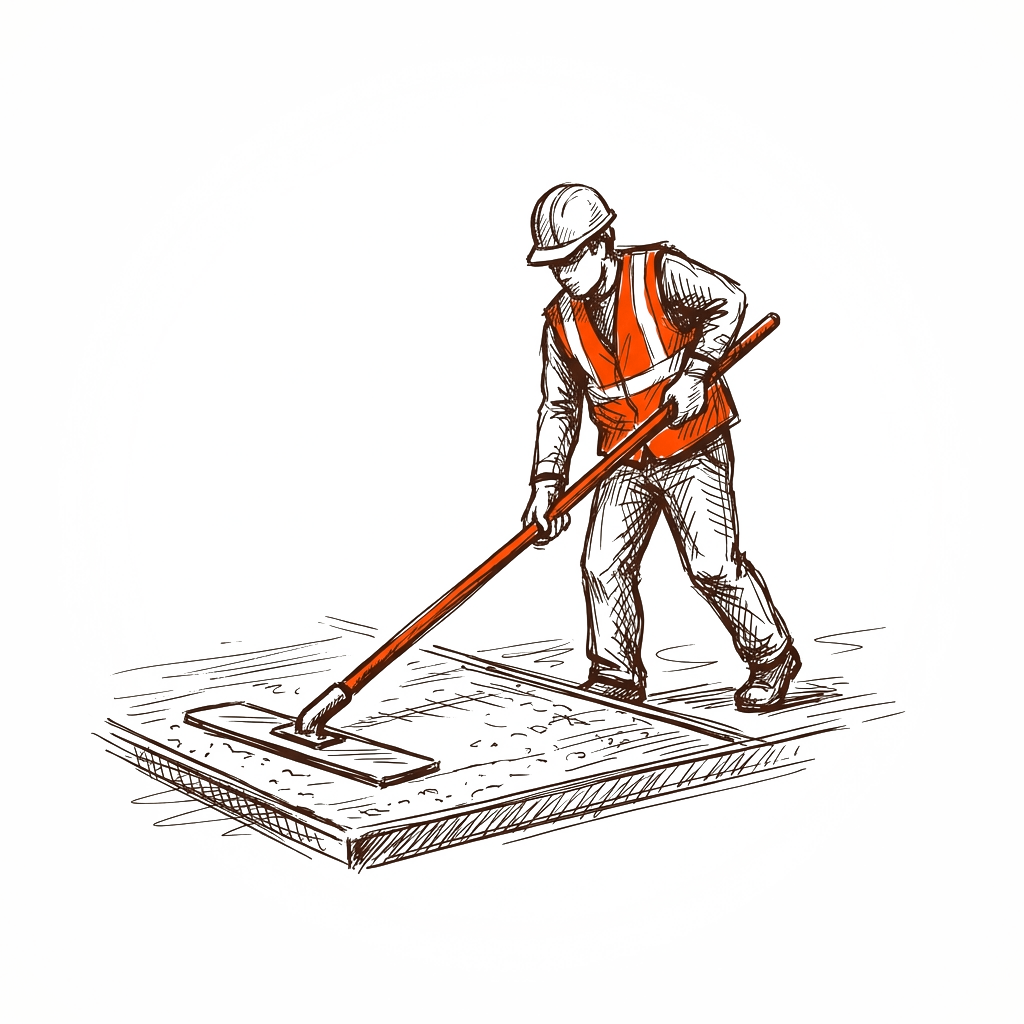
Pouring concrete is hard work, but it is not usually where contractors lose money. The money leaks happen on the quote, long before a truck shows up. A missed prep line, an overhead number you never actually calculated, a bid that takes three days to send: those are the mistakes that turn a busy season into a thin one. Here are the concrete quoting mistakes we see most often, and how to fix each one without turning your estimating into a second full-time job.
Key takeaways
- Most lost profit comes from the quote, not the pour: skipped prep, buried overhead, and slow responses.
- Price the whole job: excavation, forms, base, rebar, finishing, and cleanup, not just the concrete.
- Speed wins work. The first solid quote often takes the job before competitors reply.
- Always collect a deposit so your cash is not funding the customer's project.
Mistake 1: Forgetting the prep work
The slab is the easy part to price. The prep is where estimates fall apart. Grading, excavation, hauling off spoils, compacting the base, setting forms, placing rebar or mesh, vapor barrier: all of that is labor and material that has to land in the quote. Too many pros eyeball the square footage, multiply by a price per square foot, and call it a bid. Then the dirt turns out worse than expected and the margin is gone.
Build a repeatable line-item checklist and run every quote through it, even the small ones.
- Site access and demo of existing concrete
- Excavation, grading, and spoils haul-off
- Base material, gravel, and compaction
- Forms, stakes, and release agent
- Rebar, mesh, vapor barrier, and expansion joints
- Pump truck or wheelbarrow access if the truck cannot reach
- Finishing, sealing, saw cutting, and cleanup
Quick fix
Turn your checklist into a saved quote template. If a line is not needed on a job, you delete it. That beats trying to remember it under pressure.
Mistake 2: Underpricing overhead
Overhead is the cost of being in business even on days you do not pour. Truck payments, fuel, insurance, tools, software, phone, your office time quoting and chasing payments. If your price only covers materials, labor, and a little markup, that markup is quietly paying for overhead instead of becoming profit. You feel busy and still end up broke.
The fix is to calculate your overhead as a real number and add it to every bid, not hope it works out.
A worked example
Say your yearly overhead runs about 90,000 dollars: insurance, truck and equipment, fuel, tools, software, and the hours you spend on the business instead of in the field. Say you bill roughly 1,500 field labor hours a year across your crew. That is 60 dollars of overhead per billable hour before anyone earns a dime of profit.
Now price a driveway that takes 40 crew hours. Materials and sub costs come to 3,200 dollars. Labor at your true pay rate is 2,000 dollars. Overhead is 40 hours times 60 dollars, which is 2,400 dollars. Your break-even is 7,600 dollars. If you want a 20 percent profit margin, you need to charge about 9,500 dollars. A contractor who skips the overhead line might quote 6,500 dollars, feel competitive, and actually lose money on a job they worked hard to win.
The point
Overhead per hour is a number you can calculate once and reuse all year. Without it, you are guessing on every bid.
Mistake 3: Slow quotes
Homeowners and GCs call multiple contractors. The one who sends a clear, professional quote first often wins, even at a slightly higher price, because they look organized and responsive. If your quotes sit in a notebook until the weekend, you are handing jobs to faster competitors.
Speed does not mean sloppy. It means having your pricing, templates, and line items ready so a quote takes minutes instead of an evening.
- Measure and photograph the site during the first visit.
- Build the quote from a saved template on your phone before you leave the driveway.
- Send it the same day, within a few hours when you can.
- Follow up once if you have not heard back in two or three days.
Mistake 4: No deposit
Concrete is a materials-heavy trade. You order the mix, pay the batch plant, and often cover rebar and base before the customer pays a cent. Funding someone else's project out of your own pocket is a fast way to run into cash flow trouble, and it leaves you exposed if a customer backs out after you have bought materials.
Set a deposit policy and put it in writing on the quote. A common structure is a deposit to book and buy materials, a progress payment when key milestones hit, and the balance on completion.
- Collect a deposit, often 25 to 50 percent, before scheduling.
- Tie the deposit to covering your material and mobilization costs at minimum.
- State payment terms on the quote so there are no surprises.
- Make it easy to pay by card or digital link so a slow check does not hold up your pour.
Mistake 5: Vague scope and no change order process
A quote that just says 'pour patio' invites arguments. Does that include tear-out of the old slab? A specific finish? Sealing? When the scope is fuzzy, the customer assumes the most generous version and you eat the difference. Worse, when they ask for a thicker slab or an extra section mid-job, you do the extra work for free because there was never a process for it.
Spell out exactly what is included, what is not, and how changes get priced. A short exclusions list prevents most disputes.
Protect yourself
Add a line like: 'Any changes to scope, dimensions, or finish will be quoted and approved in writing before work continues.' That one sentence saves real money.
Mistake 6: Not tracking which quotes actually win
If you do not know your close rate, you cannot tell whether you are priced too high, too low, or just too slow. Pros who track quotes learn fast. Maybe you win almost every bid, which means you are probably underpricing and leaving money on the table. Maybe you win almost none, which means your pricing or your follow-up needs work.
Keep a simple record: date sent, amount, outcome, and why. After a month or two you will see patterns that tell you exactly what to adjust.
If building fast, clear quotes is the bottleneck, Brivium keeps your branded quote templates, scheduling, and card payments in one place so you can send a professional bid the same day, collect a deposit, and get the job on the calendar without the paperwork pile.
Start free trialFixing these before your next bid
You do not have to overhaul everything at once. Start with the two that hurt most: build a line-item checklist so prep never gets skipped, and calculate your real overhead per hour so every quote carries its weight. Add a deposit policy, speed up your turnaround, and tighten your scope language. Do those and the same jobs you are already winning will quietly make you more money.
Frequently asked questions
How much deposit should a concrete contractor ask for?
A deposit of 25 to 50 percent is typical, and it should at least cover your materials and mobilization so you are never funding the customer's project out of pocket. State the amount and terms clearly on the quote.
How do I calculate overhead for a concrete quote?
Add up your yearly fixed costs like insurance, equipment, fuel, tools, and software, then divide by your billable field hours for the year. That gives an overhead cost per hour you add to every bid before profit.
Why am I losing bids even when my prices seem fair?
Often it is speed, not price. Contractors who send a clear, professional quote the same day frequently win over slower competitors. Vague scope and missing follow-up also cost jobs.
What should always be included in a concrete quote?
List every line: excavation and grading, base and compaction, forms, rebar or mesh, the concrete and finish, saw cuts and joints, sealing, cleanup, deposit terms, and a clear exclusions and change-order statement.