Roofing
The Best CRM for Roofing Businesses
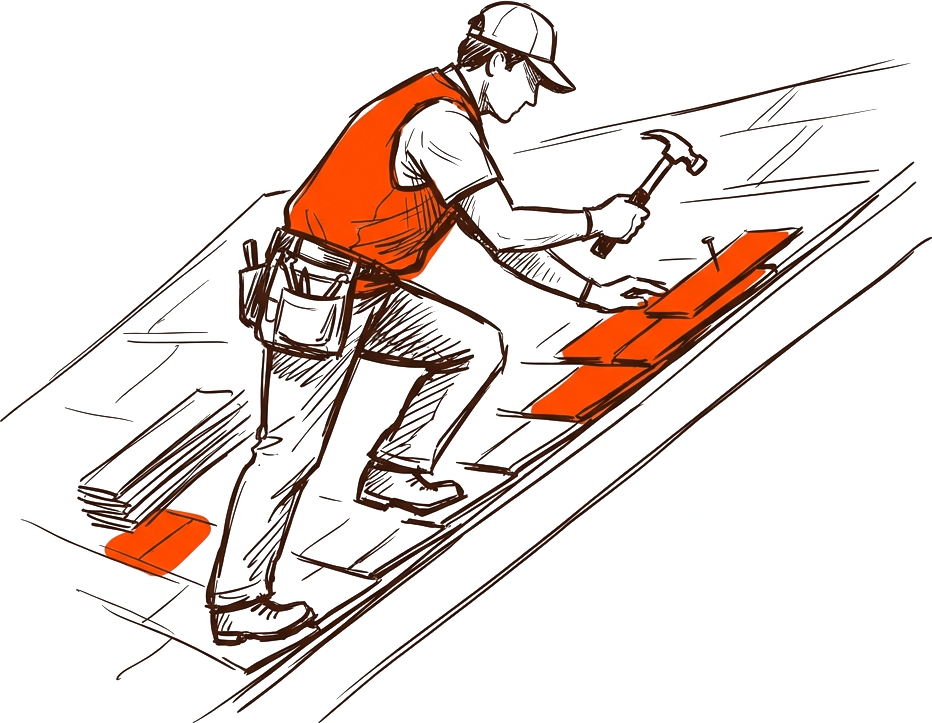
If you run a roofing crew, you already know the job is not just tearing off shingles and laying new ones. It is chasing quotes, juggling the schedule when weather rolls in, and hoping the invoice gets paid before the next material run. The right CRM should make all of that quieter, not louder. This guide walks through what actually matters when picking the best CRM for roofing, the honest tradeoffs, and where a tool like Brivium fits.
Key takeaways
- A roofing CRM should cover the full money path: quote, schedule, job, invoice, and payment in one place.
- Fast, branded quotes and easy card payments usually move the needle more than fancy reporting.
- Beware of software that is powerful but takes weeks to set up, since crews abandon tools they cannot use from a truck.
- Match the tool to your crew size and workflow, not to the longest feature list.
Why roofing needs a different kind of CRM
A lot of CRMs were built for sales teams that sit at desks and track deals for months. Roofing does not work like that. Your sales cycle can be a single storm week. Your office is a truck. Your crew wants to check tomorrow's address, not learn a pipeline dashboard. A roofing CRM has to handle field reality: quick estimates from a driveway, jobs that move because of rain, and homeowners who want to pay by card the day the ridge cap goes on.
That means the features you care about are practical, not glamorous. Can you send a professional quote in five minutes? Can the crew see the day's schedule without calling the office? Can you take a deposit before you order materials? Those questions decide whether the software helps or just sits unused.
The core features to look for
Ignore the marketing checklist for a second. For a roofing business, a handful of features do most of the work.
- Quotes and estimates: branded, itemized, and fast to send from your phone so you can close while you are still on the roof.
- Scheduling and dispatch: a calendar the whole crew can see, with easy rescheduling for weather days.
- Job tracking: notes, photos, and status so nothing falls through between tear-off and cleanup.
- Invoicing: turn an accepted quote into an invoice without retyping everything.
- Card payments: deposits and final payments taken on site or by link, so you stop waiting on checks.
- A business phone line: keep your personal number private and never miss a callback.
Rule of thumb
If a feature does not help you win a job, do a job, or get paid for a job, it is a nice-to-have. Build your shortlist around the three that do.
Honest tradeoffs: what to watch out for
No tool is perfect, and anyone who tells you otherwise is selling. Here are the real tradeoffs contractors run into.
All-in-one vs. best-in-class pieces
You can stitch together a separate quoting app, a scheduling app, an accounting package, and a payment processor. Each might be excellent on its own. The problem is the seams: data gets re-entered, things fall through the cracks, and you become the integration department. An all-in-one CRM trades some depth in each area for a lot less friction. For most small and mid-size roofing companies, fewer seams wins.
Power vs. setup time
Some enterprise roofing platforms do everything, including things you will never use. The catch is setup: weeks of configuration and training. If your crew cannot use a tool from the truck by day two, adoption dies. Favor software you can be running this week.
Cost vs. what you actually collect
A cheaper tool that you never fully use is expensive. A slightly pricier tool that helps you collect faster and quote more jobs pays for itself. Judge cost against outcomes, not just the monthly sticker.
A worked example: what faster quotes and payments are worth
Numbers make the case clearer than adjectives. Say your roofing business sends 40 quotes a month at an average job value of $9,000.
- Current close rate: 25 percent, so 10 jobs a month, or $90,000 in booked work.
- Because quoting is slow and follow-up is spotty, some homeowners go with whoever answered first.
Now suppose a faster, branded quote plus quick follow-up nudges your close rate to 30 percent. That is 12 jobs a month, or $108,000. The extra two jobs add roughly $18,000 in monthly booked revenue. Even if your net margin is 10 percent, that is about $1,800 a month in profit from a better quoting flow alone. A CRM subscription is a small fraction of that.
Payments matter too. If taking cards on site trims your average collection time from 21 days to same-day on final invoices, you keep cash moving and cut the awkward chasing calls. The savings there are not just money, they are your evenings back.
Matching the CRM to your crew size
The best fit depends on where you are.
- Owner-operator or one crew: you need speed and simplicity. Quotes, a calendar, and payments in your pocket. Avoid anything that feels like enterprise software.
- Two to five crews: now scheduling and dispatch visibility matter, plus consistent branded quotes so every estimator looks professional.
- Growing shop with an office manager: you want reporting on what is booked, what is invoiced, and what is outstanding, without moving data by hand between apps.
Across all three, the fundamentals do not change. Win the job, do the job, get paid. The difference is how much coordination sits on top.
Where Brivium fits
Brivium is built as an all-in-one CRM for US trade and field-service businesses, roofing included. It keeps the whole money path in one place: send branded quotes from your phone, book the job on a shared schedule, track the work, turn the quote into an invoice, and take card payments on site or by link. It also gives you a dedicated business phone line so your personal number stays private, plus an AI coach to help with follow-ups and next steps.
The honest pitch is this: Brivium is not the deepest tool for any single narrow task. It is designed so a roofing owner or crew can run the core workflow without duct-taping five apps together. If your priority is fewer seams and faster cash, that tradeoff usually pays off.
If you want quotes that look sharp, jobs that stay on schedule, and payments that land faster, Brivium keeps all of it in one place so you can spend less time on paperwork and more on the roof.
Start free trialHow to choose without wasting a season
- List your top three outcomes: for example, quote faster, take deposits, and cut missed callbacks.
- Test one or two tools with a real quote and a real job, not a demo dataset.
- Time yourself sending a quote and taking a payment. If it is slow for you, it will be slower for your crew.
- Check that your crew can use it from a phone with almost no training.
- Decide based on what you actually collected and booked during the trial, not the feature list.
The best CRM for roofing is the one your team actually uses every day. Keep the workflow simple, keep the cash moving, and pick the tool that gets out of your way.
Frequently asked questions
What is the best CRM for a small roofing business?
The best fit is usually an all-in-one tool that handles quotes, scheduling, invoicing, and card payments simply from a phone. For solo operators and small crews, speed and low setup time matter more than deep reporting.
Should roofers use an all-in-one CRM or separate apps?
Separate apps can be strong individually but create data re-entry and gaps. Most small and mid-size roofing companies get more value from an all-in-one CRM that reduces those seams and keeps cash moving.
Can a roofing CRM help me get paid faster?
Yes. CRMs that take card payments on site or by link, and that turn accepted quotes straight into invoices, typically shorten collection time and cut down on chasing checks.
How long does it take to set up a roofing CRM?
It varies. Enterprise platforms can take weeks, while simpler all-in-one tools like Brivium are designed to run within days so your crew can start using them from the truck quickly.