
Concrete
The Best CRM for Concrete Businesses
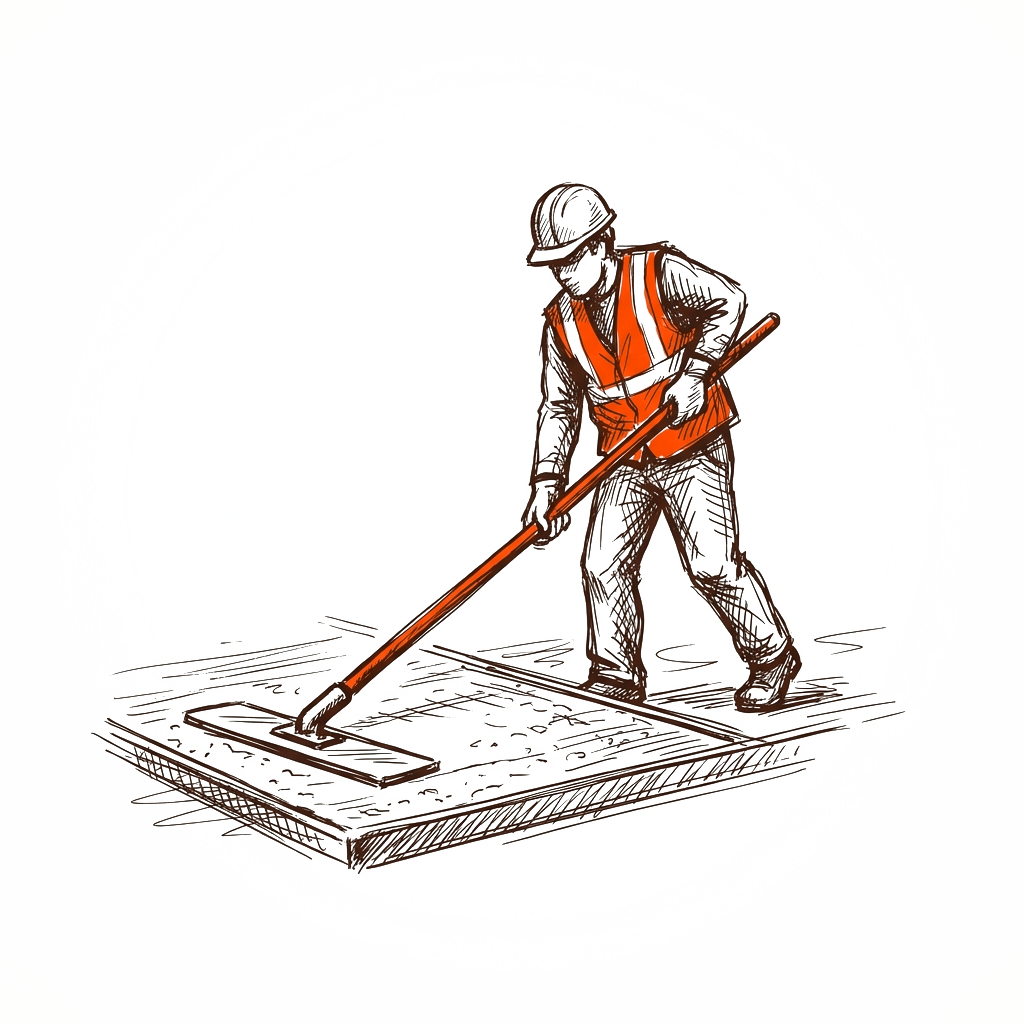
If you pour slabs, drives, patios, or foundations, you already know the office work is its own job. Chasing quotes, booking pours around the weather, invoicing before the mud sets in your memory, and running down checks. A good CRM is supposed to make that part quieter. The problem is most software was built for sales teams in cubicles, not crews on gravel. This guide covers what actually matters when you shop for the best CRM for concrete, where the honest tradeoffs are, and how Brivium fits.
Key takeaways
- The best CRM for a concrete business handles quotes, scheduling, invoicing, and payments in one place, not four apps that do not talk to each other.
- Getting paid faster usually matters more than fancy reporting. Card payments and quick invoicing move cash.
- A separate business phone line keeps customer calls organized and off your personal cell.
- Simple and used beats powerful and ignored. If the crew will not touch it, it is not the right tool.
What a concrete business actually needs from a CRM
Forget the long feature lists for a second. On a concrete job, the money moves through a handful of steps: you look at the site, you quote it, you schedule the pour, you do the work, you invoice, and you get paid. A CRM earns its keep when it smooths every one of those steps without creating busywork.
- Quotes that look professional and go out same day, not three days later when the lead has cooled off.
- Scheduling you can shuffle fast when rain pushes a pour or a ready-mix truck runs late.
- Invoicing tied to the job so you are not rebuilding line items from scratch.
- Payments that accept cards and clear quickly, because net-30 on a residential patio is how you go broke.
- A business phone line so calls, texts, and voicemails are logged against the customer instead of lost on someone's personal phone.
Everything else is nice to have. If a tool nails these five, it is in the running. If it misses two or three, you will end up stitching together spreadsheets and sticky notes again within a month.
Quotes: win the job before the competition calls back
In residential and light commercial concrete, speed on the quote wins more jobs than price alone. A homeowner who gets a clean, branded estimate the same afternoon tends to trust that you will show up on time too. Look for a CRM that lets you build a quote on your phone from the driveway, save reusable line items (square footage, prep, rebar, finish type, pump truck), and send it as a tidy document with your logo.
Watch the gap between quote and schedule
The best setups turn an accepted quote into a scheduled job in one tap. If accepting a quote still means re-typing everything into a calendar, that is friction you will pay for all season.
Scheduling around weather, concrete, and crews
Concrete scheduling is harder than most trades because you are juggling three clocks: the weather window, the ready-mix delivery, and your crew's availability. A pour that slips a day can cascade into three jobs out of sequence. Your CRM calendar should let you drag jobs around quickly, see who is assigned at a glance, and send the customer a heads-up text when timing shifts.
Be honest about how your crew works. If your foreman lives on his phone, you want a mobile view that loads fast on a weak signal. If you dispatch from the office, you want a clean week view on a laptop. The best CRM for concrete is the one that matches how you already run, not the one that forces a new process on day one.
Invoicing and payments: where the real money is
Here is the part that quietly makes or breaks a small concrete outfit: the time between finishing the job and the money hitting your account. Every day that stretches out is a day you are floating material and labor costs. The goal is to invoice the same day you strip the forms and make it dead simple for the customer to pay by card.
Let's run a quick example. Say you do 6 residential jobs a month at an average ticket of $4,200, so $25,200 in monthly revenue. Suppose your old paper-and-check process means payment lands, on average, 18 days after completion. If a CRM with card payments and instant invoicing cuts that to 4 days, you just pulled roughly two weeks of cash forward across every job. On $25,200 a month, that is around $12,000 sitting in your account instead of in limbo, every single month. That cash cushion is often the difference between taking the next job and turning it down because you cannot cover the concrete.
The honest tradeoff on card fees
Card processing typically runs in the low single-digit percentages per transaction. On a $4,200 job that is real money. But weigh it against the cost of waiting weeks, driving to pick up checks, and the jobs you lose when a customer cannot pay on the spot. For most concrete contractors, faster cash wins. You can also pass fees along or offer a cash discount where legal.
The business phone line most contractors overlook
Most concrete owners run the business off a personal cell, which means missed calls get buried, texts to customers mix with texts to your family, and nobody else can cover the line when you are elbow-deep in a pour. A dedicated business line that lives inside your CRM keeps every call and text logged against the right customer, so when someone phones about a cracked slab from two years ago, the history is right there.
This also makes it easier to add a second person without handing out your private number. When you sell the business or step back from the phones, the number and the call history stay with the company, not with your old iPhone.
Where Brivium fits for concrete contractors
Brivium is built as an all-in-one CRM for US trade and field-service businesses, which means the five things above live in one app instead of five subscriptions. You can send a branded quote from the truck, turn it into a scheduled pour, invoice the job, and take a card payment, all tied to the same customer record. The business phone line keeps your calls and texts organized, and the built-in AI coach can help you tighten up follow-ups and quoting habits over time.
To be fair about tradeoffs: an all-in-one tool will not have every niche feature that a single-purpose estimating program has, like deep concrete yardage calculators or 3D takeoffs. If that specialized math is central to your bidding, you may still pair a takeoff tool alongside your CRM. But for the day-to-day flow of quote, schedule, invoice, get paid, keeping it under one roof removes a lot of friction and double entry.
If you want to send branded quotes faster, keep pours organized on one calendar, and get paid the day you finish, Brivium brings quoting, scheduling, invoicing, and card payments into a single app built for concrete and field-service crews.
Start free trialHow to choose, in one page
- List your five steps: quote, schedule, do the work, invoice, get paid. Score each tool on all five.
- Test the mobile experience first. If it is clumsy in the field, the crew will not use it.
- Run a real quote and a real invoice during the trial, not a demo with fake data.
- Check how fast money actually clears to your bank after a card payment.
- Make sure customer calls, texts, and history live in one place you control.
The best CRM for concrete is not the one with the longest feature list. It is the one your crew will actually use every day, that gets quotes out fast and cash in faster. Pick for the flow of the work, and the rest tends to follow.
Frequently asked questions
What is the best CRM for a concrete business?
The best CRM for a concrete business is one that handles quotes, scheduling, invoicing, and card payments in a single app the crew will actually use in the field. Prioritize fast quoting and getting paid quickly over heavy reporting features.
Can a CRM help me get paid faster on concrete jobs?
Yes. Invoicing the same day you finish and accepting card payments on the spot can cut the wait from weeks to days, pulling significant cash forward each month even after processing fees.
Do I need a separate business phone line for my concrete company?
It helps a lot. A dedicated line inside your CRM keeps customer calls and texts logged against each job, lets others cover the phone, and keeps the number with your business instead of your personal cell.
Will one all-in-one CRM replace my concrete estimating software?
For everyday quoting, scheduling, invoicing, and payments, yes. For deep concrete takeoffs and yardage math, you may still pair a specialized estimating tool, then run the quote-to-payment flow in your CRM.